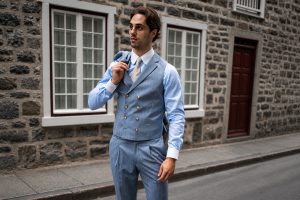
Suits for Athletic and Big & Tall Builds: Fit, Style and Fabric

The best suits for athletic and big and tall builds are cut to the body, not chosen from a size chart. Off-the-rack suits assume a fixed six-inch (15 cm) difference between chest and waist, so a broad chest, strong thighs, a fuller middle or long limbs always break the pattern somewhere. Ask for room through the shoulders, chest and thighs, a clean taper where your body tapers, and lengths set to your own proportions. A pattern generated from a scan of your body does this from the start: you choose the cloth and details, come in for one fitting, and the suit is ready in four weeks.


Suits for Athletic and Big & Tall Builds: What to Ask For

 
Build The off-the-rack problem What to ask for
Athletic (broad chest, narrow waist) Fits the chest, balloons at the waist; or fits the waist, strains at the chest Higher drop, room in the armholes and upper arm, roomier seat and thigh with a taper below the knee
Big (fuller chest and middle) Jacket pulls at the button, trousers ride low Clean waist with no pulling, mid-rise or higher trousers, longer jacket to cover the seat
Tall (long torso and limbs) Sleeves and jacket look cropped, trousers short Jacket and sleeve length set to your arms and torso, trousers with enough inseam for a slight break
Big and tall All of the above, at once A pattern drawn from your own measurements

Why Off-the-Rack Suits Rarely Fit Athletic or Big & Tall Builds


Off-the-rack suits are sold with a fixed “drop”: the difference between the jacket’s chest size and the trouser’s waist. The industry standard is six inches, so a size 40 jacket comes with 34-inch trousers.


Drop (chest minus waist) Typical fit label Who it suits
6 in (15 cm) Standard / classic The average body the size chart is built on
7 in (18 cm) Slim A trimmer waist
8 in (20 cm) or more Athletic Broad chest and shoulders, narrow waist
Less than 6 in Portly or relaxed A fuller middle

An athletic man often has a drop of eight inches or more. A bigger man may have a drop of two or three. Neither matches the standard, so one half of the suit is always wrong.


The parts that matter most are also the hardest to alter. Shoulders, jacket length and the position of the pockets and buttons cannot be moved by a tailor. That is why “buy bigger and take it in” usually ends with a suit that is merely smaller in the wrong places.


In our showrooms, the most common story we hear from athletic clients is the same: a jacket bought for the shoulders, then taken in so far at the waist that the pockets meet at the back seam.


Suits for Athletic Builds: Where the Fit Goes Wrong


The chest and shoulders. A jacket that fits a broad chest off the rack is often far too loose at the waist. Size down for the waist and the lapels pull away from the chest, with an X of tension around the button.


The arms. Strong biceps and shoulders need a higher, closer armhole and more room in the upper sleeve. A low armhole looks roomy but restricts movement: raise your arm and the whole jacket lifts.


The seat and thighs. Trousers that fit the waist often cling to the thighs and seat. You need more room above the knee and a clean taper below it, so the trouser falls straight instead of hugging the leg.


How to Style an Athletic Build in a Suit

 
  • Don’t cut it too tight. A suit that shows every muscle looks small, not strong. Ease through the chest and back reads as confidence.
  • Choose a moderate lapel. A lapel of about 8 to 9 cm balances a broad chest. A skinny lapel makes the shoulders look even wider. See our guide to suit lapels.
  • Pick a soft or natural shoulder. You already have the width. Heavy padding adds bulk you do not need.
  • Add stretch. Wool with a small amount of natural stretch moves with you without losing its line.
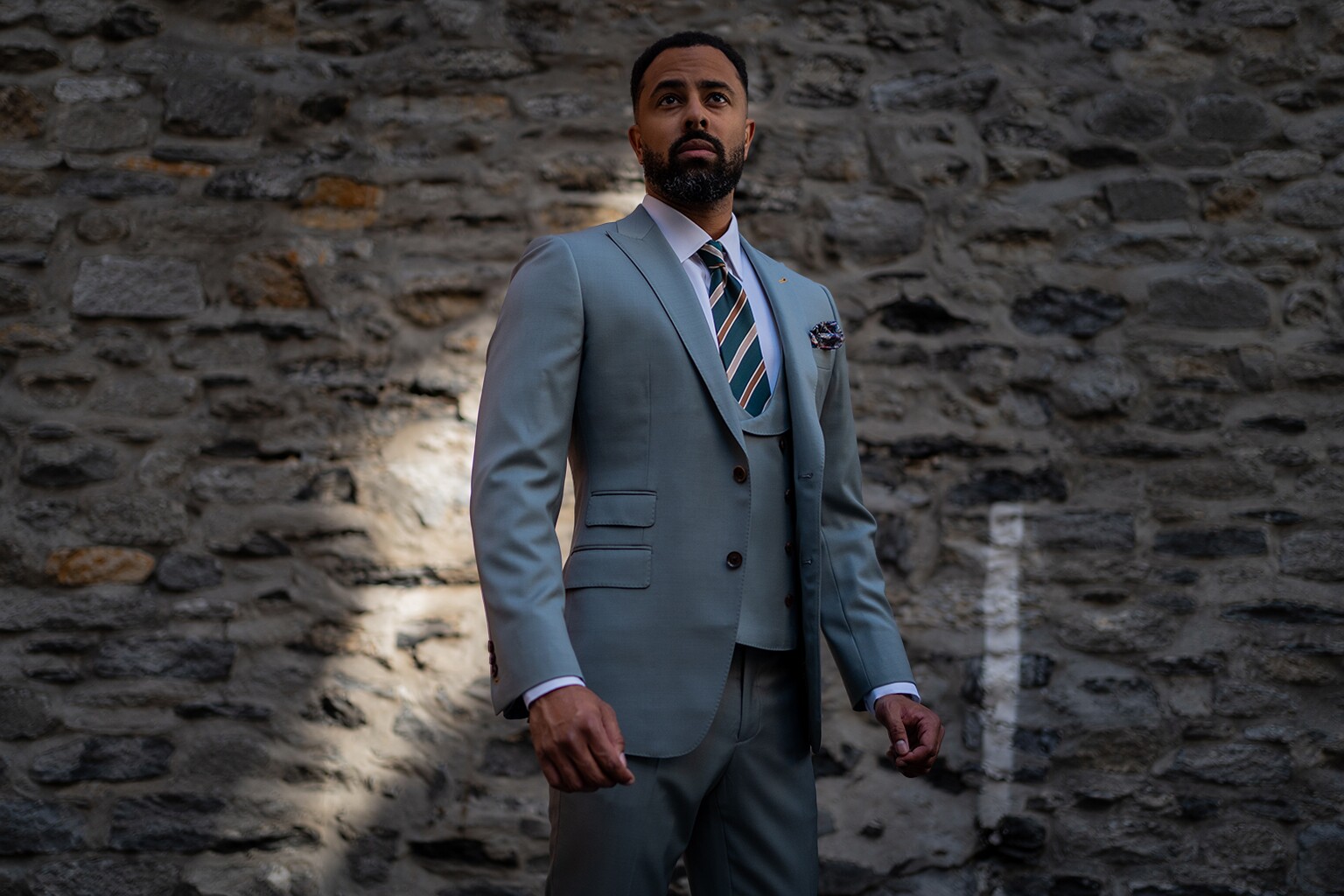
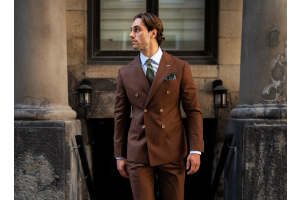
  • Try a double-breasted jacket. The V of a double-breasted suit flatters a broad chest and narrow waist more than any other cut.


Athletic Fit vs Slim Fit: What Is the Difference?


A slim fit narrows the whole suit: chest, waist, arms and legs. An athletic fit narrows only the waist and keeps room in the chest, shoulders, arms and thighs. A man with a muscular frame in a slim fit feels the suit everywhere; in an athletic fit, it follows his shape.

  •  

Suits for Big Men: Proportion Over Size


Fit the waist without pulling. The jacket should close with no strain at the button and no X-shaped creases. If it pulls, it is too small, however slim it looks on the hanger.

Choose a mid-rise or higher trouser. Low-rise trousers slide under the stomach and need constant adjusting. A higher rise sits at the natural waist and keeps the shirt tucked.

Keep the jacket long enough. It should cover the seat. A short jacket breaks the body in half and draws attention to the middle.


How to Style a Bigger Build in a Suit

 
  • Single-breasted, two buttons. It creates a long, clean V from the shoulder to the waist.
  • Medium to wide lapels. A narrow lapel looks undersized on a large frame. Match the tie to the lapel width.
  • Dark solids and subtle verticals. Navy, charcoal and a fine pinstripe lengthen the frame. Large checks and high-contrast patterns add width. See more how to wear a pinstripe suit.
  • Matte, smooth cloth. A shiny or very textured fabric catches light across the widest part of the body.
  • Double vents. They keep the back of the jacket flat when you sit or reach into a pocket.


Suits for Tall Men: Get the Lengths Right


Tall men rarely need more width. They need more length, and in the right places. Sleeves, jacket and trousers all have to grow with the body.


Sleeves. About 1 cm of shirt cuff should show at the wrist. On a tall man with long arms, off-the-rack sleeves usually stop short.


Jacket length. The jacket should cover the seat. Tall men often have long legs relative to the torso, so the old “thumb knuckle” rule is unreliable; length should be set against your torso, not your hand.


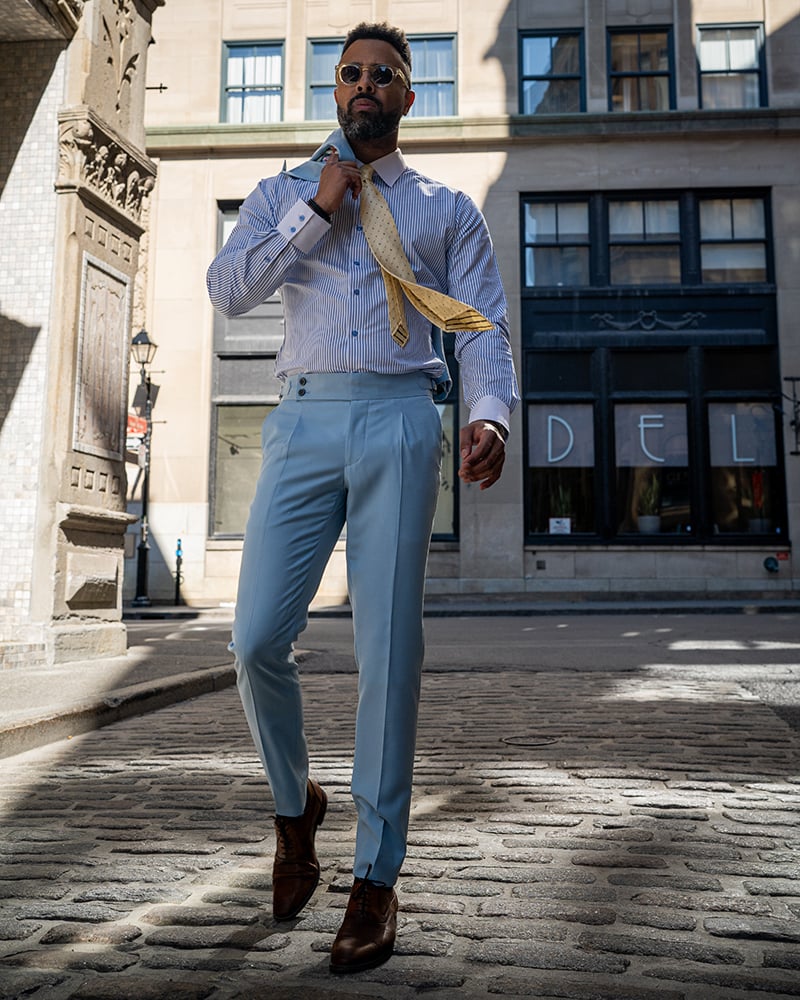
Trousers. Choose a slight break. Too little length on a tall man makes the trouser look outgrown. Our guide to trouser lengths explains each break.


suits-for-tall-men-light-blue-high-waist-trousers-slight-break-suitablee.jpg


How to Style a Tall Build in a Suit


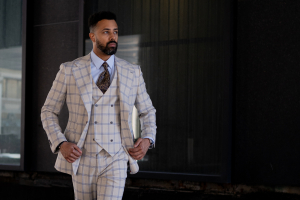
  • Use pattern and texture. A glen check, a flannel or a windowpane breaks up height in a way a big frame cannot carry.
  • Wear separates. A jacket and trousers in different tones divide the height.
  • Choose a slightly wider lapel. It keeps the jacket in scale with the frame.
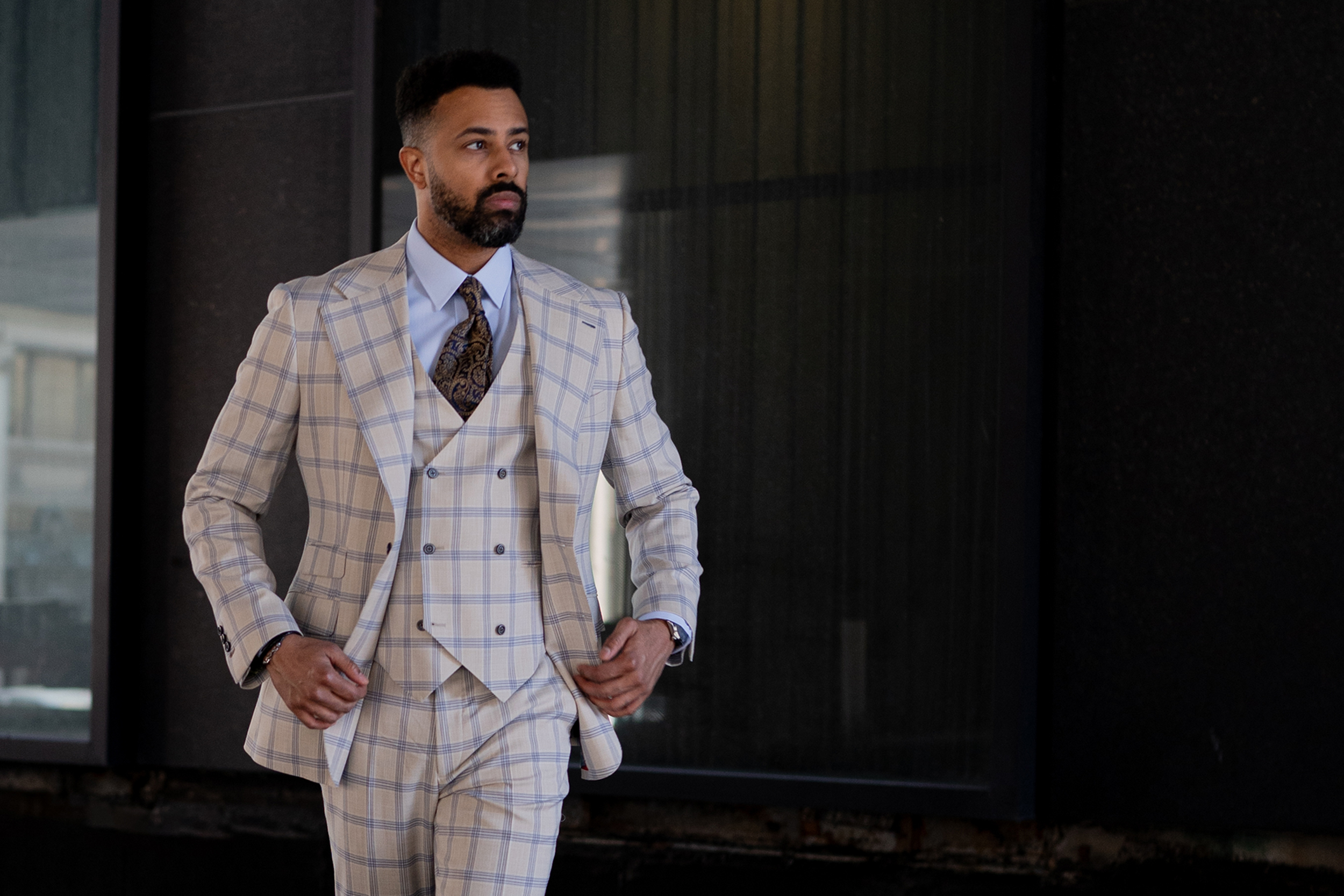
  • Consider a three-piece. A waistcoat adds a horizontal line and fills a long torso.


Big and Tall: When Both Apply


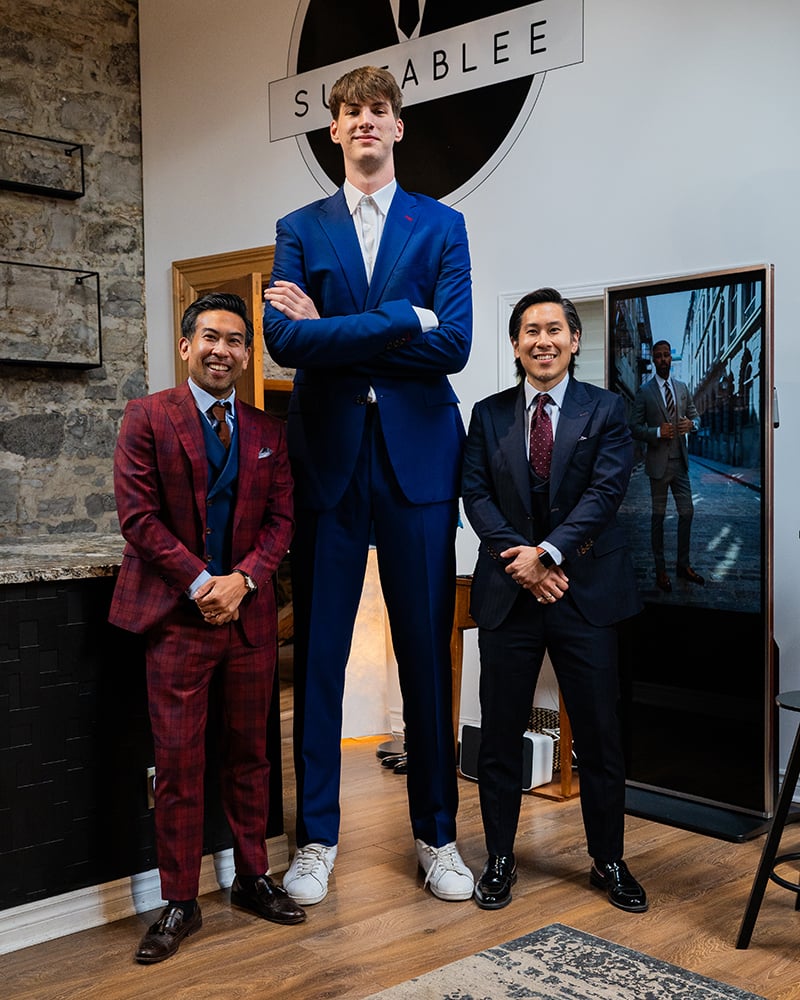
Big and tall men face every problem above at once: width, length and proportion. Off-the-rack ranges grade one base pattern up or down, so the proportions of a size 54 Long are still the proportions of a size 40 Regular, made larger.

This is the case where custom stops being a preference and becomes the practical answer.


Athletic and Curvy Builds in Women’s Suits


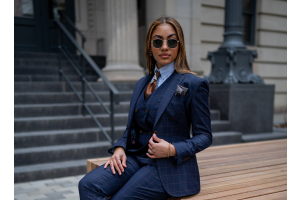
Women face the same problem in a different shape. Women’s sizes assume a fixed ratio between bust, waist and hips, so an athletic frame with strong shoulders, or a curvy frame with a defined waist and fuller hips, rarely fits one size top to bottom.


Ask for a jacket cut for the shoulders and bust with shaping at the waist, and trousers sized for the hips with the waist taken to fit. A pant suit with a straight or wide leg balances strong thighs; a jacket that ends at the hip lengthens a shorter torso. Explore tailored suits for women.


Fabric Choices for Athletic and Big & Tall Builds

 
  • Mid-weight worsted wool holds its shape over a strong frame and drapes without clinging.
  • Wool with natural stretch suits athletic men who move, lift or travel in their suits.
  • Tropical wool keeps a larger frame cool in summer without the creasing of linen.
  • Avoid very lightweight or shiny cloth, which shows every pull and catches light on the widest areas.

Our guides to wool vs polyester and fabric weaves go deeper.


The Shirt Matters Too


A shirt that strains at the collar or the chest undoes a well-cut suit. Athletic men need a collar sized to the neck and room in the chest and upper arm. Big men need a collar that closes without pinching and a long enough tail to stay tucked. Tall men need sleeves that reach the wrist bone with the arm bent. Women with strong shoulders or a fuller bust need a shirt that closes without gaping between the buttons.


The fix is the same as for the suit: cut the shirt to your measurements. Browse custom shirts for men and custom shirts for women, or design your own shirt.


How a Custom Suit Solves Athletic and Big & Tall Fit


A made-to-measure suit adjusts a base pattern toward your measurements. That helps, but the base pattern still assumes a standard body. For a 10-inch drop or a 6-foot-5 frame, the adjustment runs out of room.


At SUITABLEE, the pattern is generated from an infrared scan of your body. It records shoulder slope, chest, waist, seat, thigh and arm length as they are, including the asymmetries most people have. Nothing is graded from a size 40. That is why 95% of first fittings need no alteration, whatever the build.


For the difference between the three approaches, compare made to measure, bespoke and off the rack.


custom-suit-very-tall-man-royal-blue-suitablee-showroom.jpg


The SUITABLEE Perspective


The right suit for an athletic build or a big and tall frame is not a bigger suit or a tighter one. It is a suit drawn for your proportions, with room where you need it and shape where you have it.

That said, cut is only part of the answer. A moderate lapel, the right rise, a matte wool and a dark colour do as much as any measurement.


Fit is what makes a strong frame look intentional. Explore the men’s suit collection, or browse custom double-breasted suits for a cut made for a broad chest.


Made for you, not a size chart. Book your fitting in Montréal, Brossard, Laval, Ottawa or Toronto. Ready in four weeks.


Frequently Asked Questions


What is an athletic fit suit?

A suit cut with more room in the chest, shoulders and thighs and a narrower waist than a standard suit. Off-the-rack athletic fits usually use a drop of seven or eight inches between chest and waist instead of the standard six.


What is the difference between athletic fit and slim fit?

A slim fit narrows the whole suit, including the chest, arms and legs. An athletic fit narrows only the waist and keeps room in the chest, shoulders, arms and thighs, so it suits a muscular frame.


What is a suit drop?

The difference between the jacket’s chest size and the trousers’ waist size. A size 40 jacket with 34-inch trousers has a six-inch drop, the industry standard. Athletic men often need eight inches or more.


Why don’t off-the-rack suits fit muscular men?

They are cut for a standard six-inch drop. A muscular man’s chest and waist rarely match it, so the jacket fits the chest and balloons at the waist, or fits the waist and strains across the chest. Shoulders and jacket length cannot be altered enough to fix it.


What suit style is most flattering for big men?

A single-breasted, two-button jacket in a dark solid or subtle pinstripe, with medium to wide lapels, a jacket long enough to cover the seat, and mid-rise trousers. Fit without pulling at the button matters more than any style choice.


How long should a suit jacket be for a tall man?

Long enough to cover the seat. Because tall men often have long legs relative to the torso, the length should be set against your torso rather than your hand.


Can big and tall men get a custom suit?

Yes. A custom suit is the most reliable option for big and tall men, because the pattern is cut to your own measurements instead of graded up from a standard size. SUITABLEE suits are cut from an infrared body scan and ready in four weeks.