Wool or Polyester? What You Need to Know About Wool Suits versus Polyester Suits


A suit’s fabric influences everything you notice when you wear it, from how it feels in heat to how it drapes on your body, how it holds up over time, and how sharp it looks in photos. Choosing between wool and polyester is really about matching your suit to your lifestyle, how often you’ll wear it, your climate, and what you value most in comfort, breathability, drape, and longevity. Wool is often preferred for formal wear and frequent use because it tends to look more refined and feel more breathable, while polyester is a more practical, budget-friendly option that can offer convenience at a lower price. 


In this guide, we’ll compare wool versus polyester across comfort, durability, price, and real-world performance, so you can confidently choose the suit fabric that fits your needs and your wardrobe.


Quick Comparison, Wool vs Polyester Suits


If you want the simplest comparison, focus on comfort, appearance, durability, care, and overall value. Wool usually leads in breathability and natural drape, which is why it’s widely chosen for business and formal events. Polyester can be a practical option when you want a lower upfront price or if you rarely wear suits.


However, wearing a suit only occasionally often means wearing it for high-stakes moments, weddings, milestone celebrations, career-defining meetings, times when confidence needs to feel effortless. In those situations, wool becomes the smarter investment, offering superior comfort, breathability, drape, and long-term quality when you want to look and feel your best.

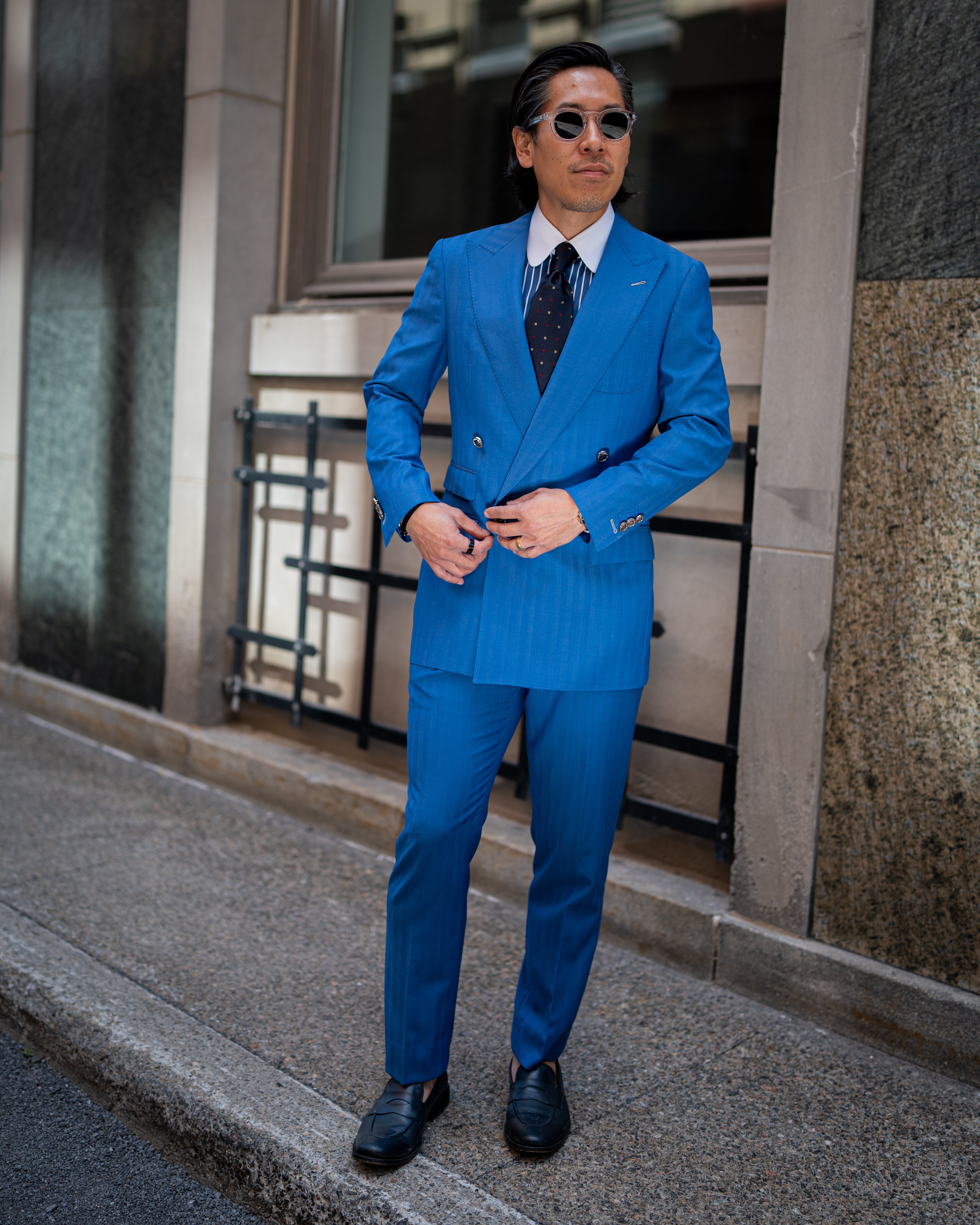
blue-double-breasted-wool-suit-urban-look_1.jpg


Let’s Dive Deeper, What Makes Wool and Polyester So Different


What Is a Wool Suit? 


A wool suit is made from natural fiber, and it’s considered the classic suit fabric for good reason. Wool can be woven in many ways, which allows it to work across seasons, from lightweight options for warm weather to thicker weaves for colder months. For both men’s suits and women’s suits, wool is often chosen because it looks refined on the body. It hangs cleanly, moves naturally, and tends to look premium in photos and real life.


Different wool types also change the experience. Worsted wool is smooth and versatile, flannel is soft and warm, tweed is textured and heritage-inspired, and tropical wool is designed to be lighter and more breathable. 


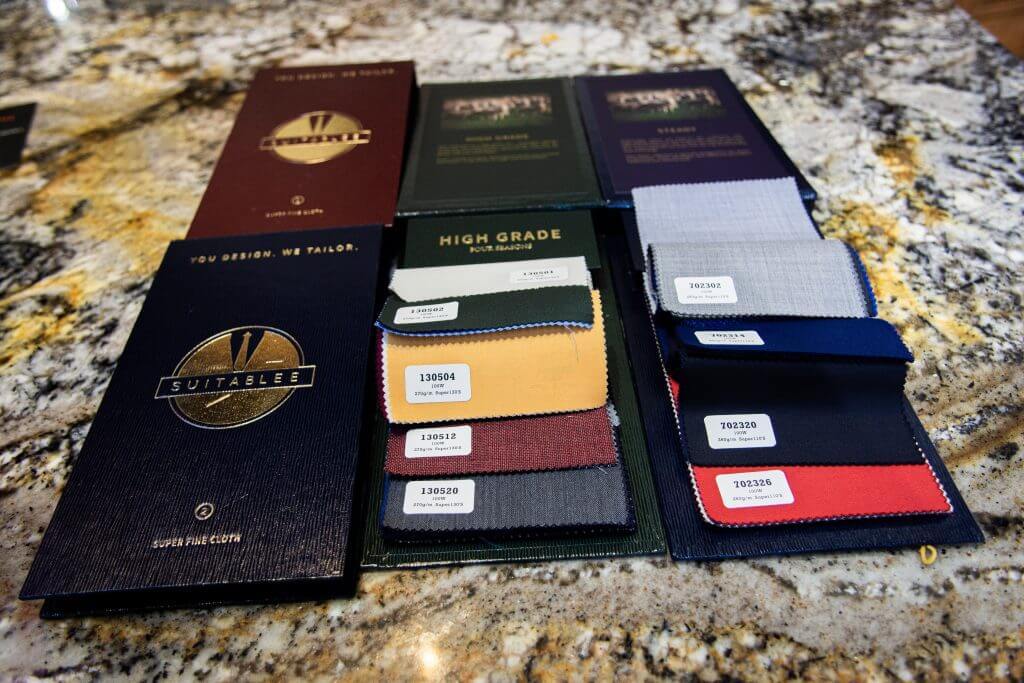
If you want to compare wool options side by side, the Fabric Collection makes it easier to choose what fits your lifestyle and climate.


50--00150-0271-000-00003_cover.jpg


What Is a Polyester Suit


A polyester suit is made from synthetic fiber and is widely used because it can lower cost and add convenience. Polyester is often described as wrinkle resistant and easy to care for, which can be helpful for travel, last-minute events, or occasional wear. The trade-off is that polyester tends to be less breathable than wool, which can make it feel warmer indoors or in summer.


It’s also important to separate 100 percent polyester from blends. A fully polyester suit is typically the most budget-friendly option, but it can look stiffer or develop shine over time. Polyester blends can perform better, depending on overall quality and the blend ratio.


Wool vs Polyester, The Differences That Matter Most


The biggest difference most people feel is breathability. Wool tends to regulate temperature better and handle moisture more naturally, which matters if you wear your suit for long hours, commute, or run warm. Polyester is more likely to trap heat, which can lead to discomfort in humid weather or indoor-heavy days.


The next major difference is drape, meaning how the suit hangs on your body. Wool usually falls more smoothly, creating a cleaner silhouette. Polyester can look more rigid, and lower-grade polyester may appear shinier under certain lighting, which can reduce the premium feel.


Over time, both fabrics can be durable, but they age differently. Wool, when cared for properly, often keeps its refined look for years. Polyester can resist wrinkles well, but it may show pilling or develop shine in high-friction areas depending on quality and frequency of wear.

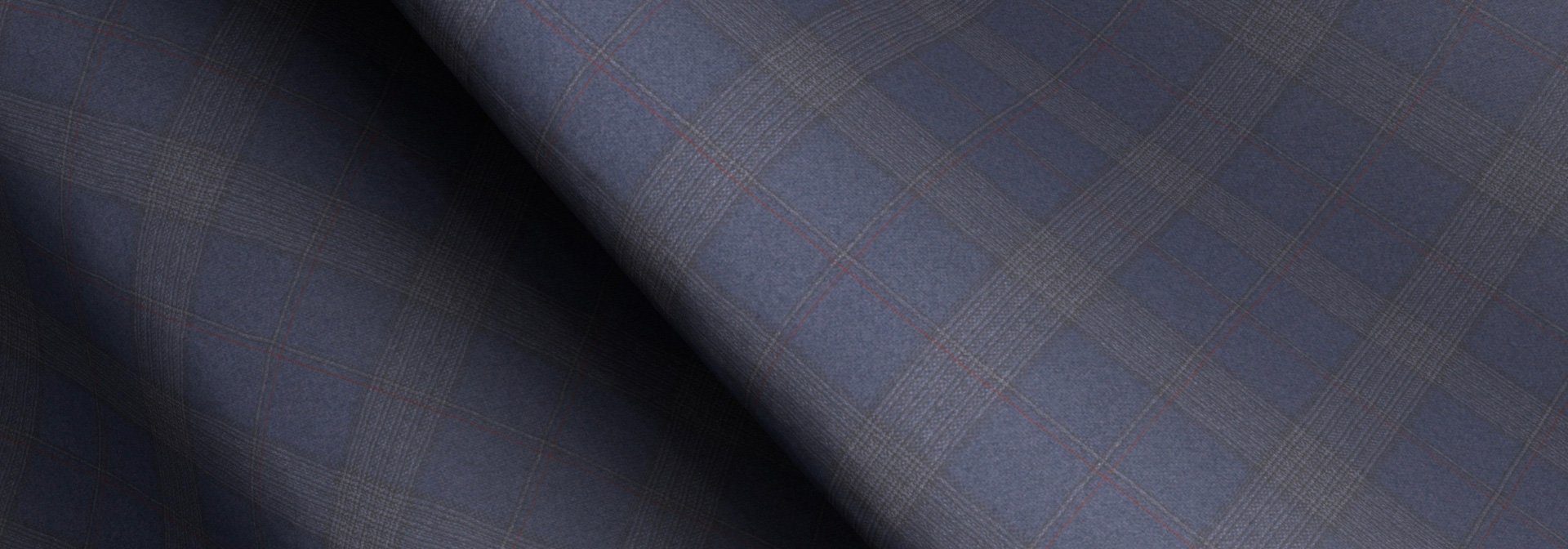
Fabric-Swatch-1024x683.jpg


Pros and Cons of Wool Suits and Polyester suits 

wool-vs-polyester-suit-comparison-infographic-suitablee.png


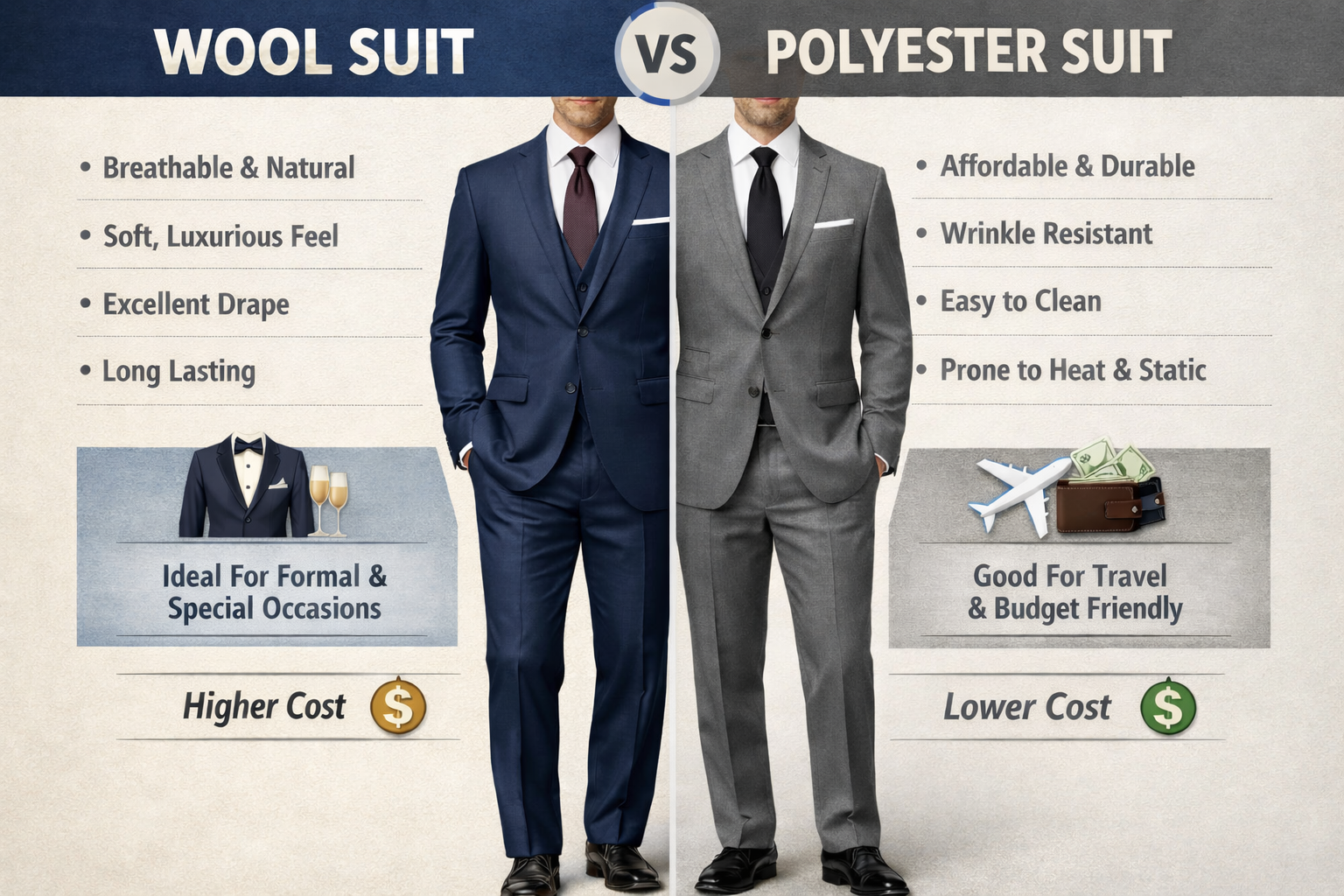
Wool suits are often the best choice if you care about comfort, appearance, and long-term value, because their breathability and natural drape help them look sharper for business, formal events, and everyday professional wear. Wool also offers flexibility since you can choose different weights for different seasons. However, wool suits usually cost more upfront, and they benefit from smarter maintenance like proper hangers, space to breathe, and careful storage. Choosing the right wool weight also matters, because warm-weather wool and cold-weather wool feel very different.


brown-wool-three-piece-suit-custom-suitablee.jpg


Polyester suits are popular because they’re accessible and practical, especially if you need a suit on a tighter budget or you need one quickly. Many polyester suits are also wrinkle resistant, which can be helpful for travel or short-notice plans. On the downside, the trade-offs usually show up in comfort and appearance, since polyester is often less breathable and can feel warmer during long wear. Lower-quality polyester may also look less natural in drape, hold odor, build static, or develop shine over time.


What About Wool Polyester Blends


For many buyers, blends offer a practical middle ground. A wool-polyester blend can reduce price while improving wrinkle resistance compared to some pure wool fabrics. At the same time, a wool-heavy blend often feels more breathable and looks more refined than 100 percent polyester.

As a simple rule, higher wool content usually improves comfort and drape, while higher polyester content usually improves wrinkle resistance and lowers cost. If you tend to feel warm in suits, leaning toward wool-heavy blends is usually the safer choice.


How to Spot a Higher-Quality Suit Fabric


If you’re comparing fabrics in person or online, a few quick checks can help you avoid disappointing purchases. For wool, look for a fabric that feels smooth, has a clean finish, and springs back after a light squeeze. Better wool usually drapes naturally and looks refined under different lighting.

For polyester, avoid fabric that looks overly shiny or feels stiff. If it reflects light sharply, it often looks less premium in photos and may wear less gracefully over time. When comparing blends, higher wool content usually improves comfort and appearance.

Once you’ve chosen the fabric direction, the next step is making it yours. If you want to select details like lapels, lining, buttons, and finishing, start with Design Your Suit.


If you’re browsing ready-to-start styles for different wardrobes, explore the Men’s Suit Collection or the Women’s Suit Collection to narrow down silhouettes before choosing fabric and design details.


Care Tips to Make Any Suit Last Longer


Good care extends the life of your suit regardless of fabric. Rotate wears so your suit can recover its shape, air it out after long days, and use a steamer to refresh it instead of over-cleaning. Store it on a structured hanger to support the shoulders and avoid tight closets that crush the fabric. Wool benefits from breathable storage and moth protection, while polyester benefits from proper airing to reduce odor build-up.


pastel-blue-three-piece-suit-street-style-suitablee.jpg


The SUITABLEE Perspective


At SUITABLEE, we believe the “best” suit fabric depends on how you want to feel and show up, not just the price tag. Wool remains our top recommendation for clients who value comfort, breathability, natural drape, and longevity, especially for formal wear and meaningful occasions where confidence matters. Even if you only wear a suit occasionally, those moments are often the ones that last, weddings, milestone celebrations, and career-defining meetings. In those high-stakes situations, wool’s refined look and all-day comfort can make a noticeable difference.


That said, we also understand that practicality matters. If you’re choosing a suit on a tighter budget, for travel convenience, or for a lower upfront price, polyester or a wool blend can be a budget-friendly solution. But no matter which fabric you choose, Fit is everything. Fit is what sharpens the silhouette, elevates the drape, and turns comfort into confidence, whether you’re wearing wool, polyester, or a balanced blend. In the end, our goal is the same, a suit that looks sharp, feels effortless, and fits you perfectly when it matters most.


If you want guidance choosing the right fabric weight, blend, or finish for your lifestyle, the fastest next step is to Book an Appointment


FAQs: Understanding the Distinction: Made-to-Measure vs. Off-the-Rack Suits


Do polyester suits look cheap?  

Not always, but lower-quality polyester can appear shiny or stiff. Higher-quality blends usually look more refined than 100 percent polyester.

Are wool suits too hot for summer? 

Not necessarily. Lightweight wool can be breathable and comfortable in warm weather, often more so than heavier synthetic fabrics.