How to Wear a Double-Breasted Suit

The 6×2 button configuration is the most versatile and flattering choice for a double-breasted suit, creating a clean, architectural V-shape that suits nearly any build. Only the top functional button should be fastened, never the bottom, to preserve the jacket's drape. Removing the tie and swapping in loafers or clean sneakers relaxes the look for casual wear.

When worn right, a double-breasted suit is one of the most flattering and expressive pieces you can own. All it takes is the right fit, a few style fundamentals, and a little confidence.


Let’s walk through exactly how to wear one well.


What Makes a Double-Breasted Suit Different?

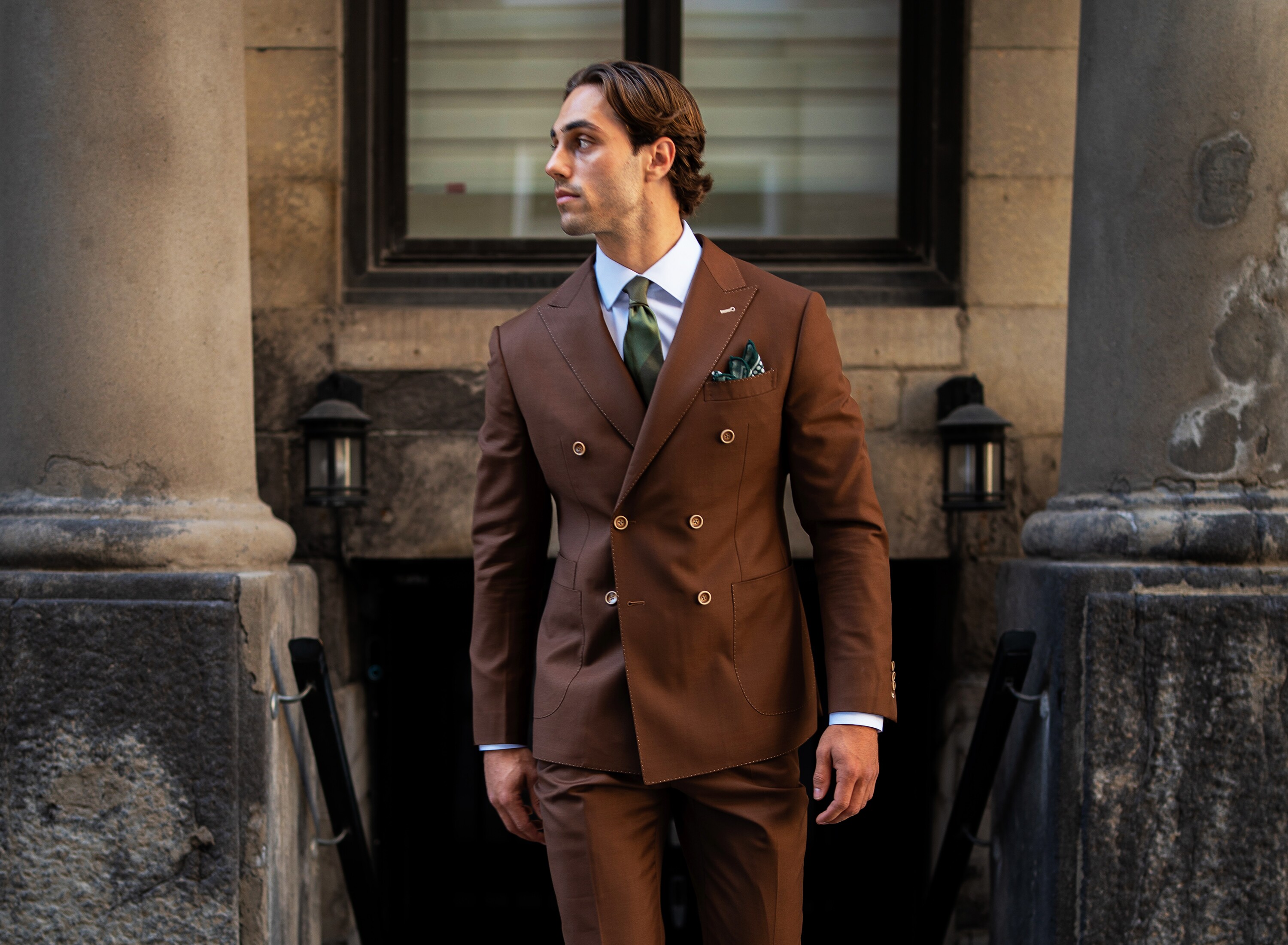
A double-breasted suit features overlapping front panels and two vertical columns of buttons, typically four or six. Its design is built to stay fastened, giving it a structured shape that enhances the shoulders and narrows the waist. This creates the sought-after V silhouette that defines sharp tailoring.


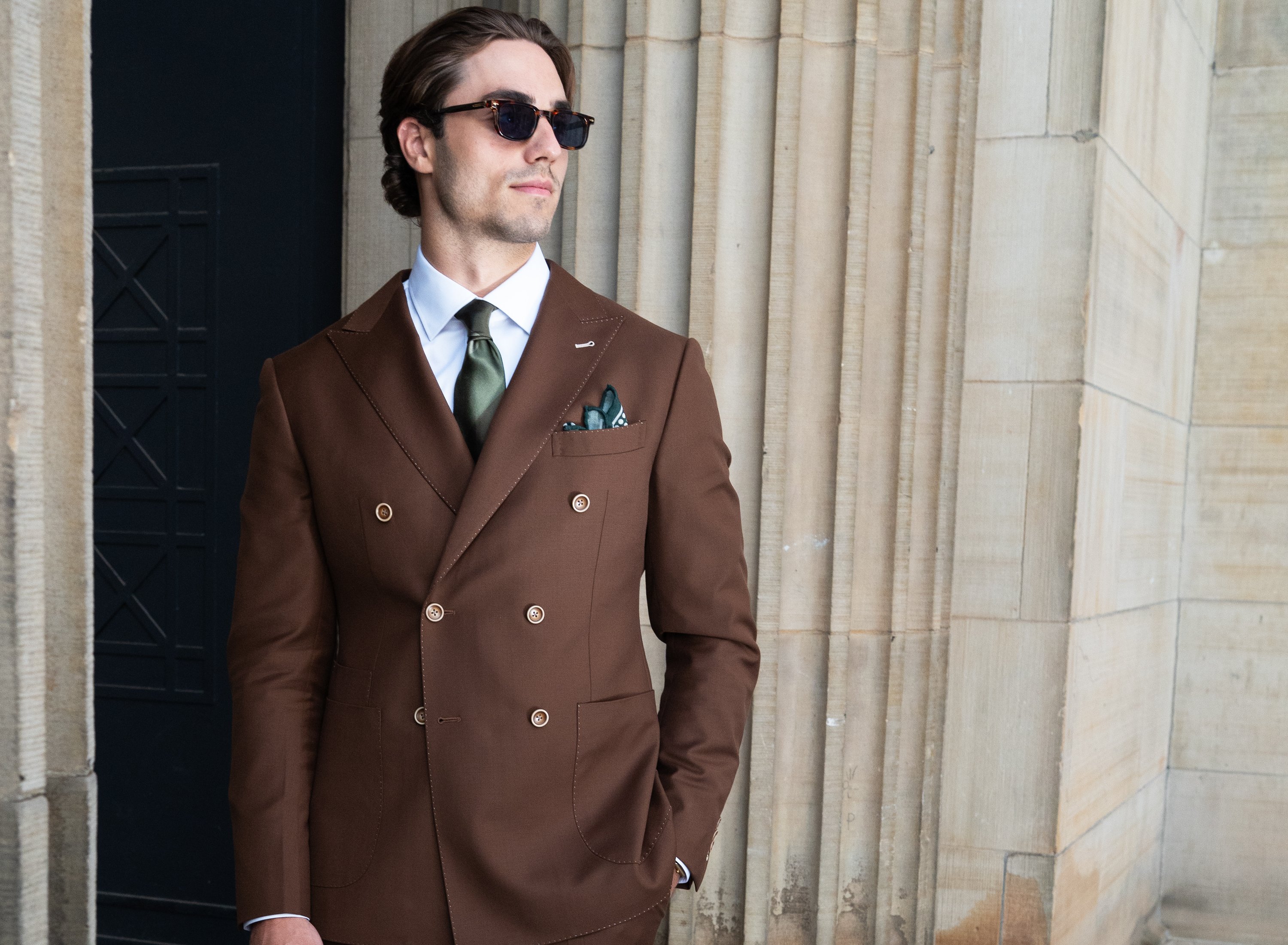
The most recognizable detail? The peaked lapels. They lead the eye upward and contribute to the bold, powerful impression that double-breasted jackets naturally give.

Why Choose a Double-Breasted Suit?

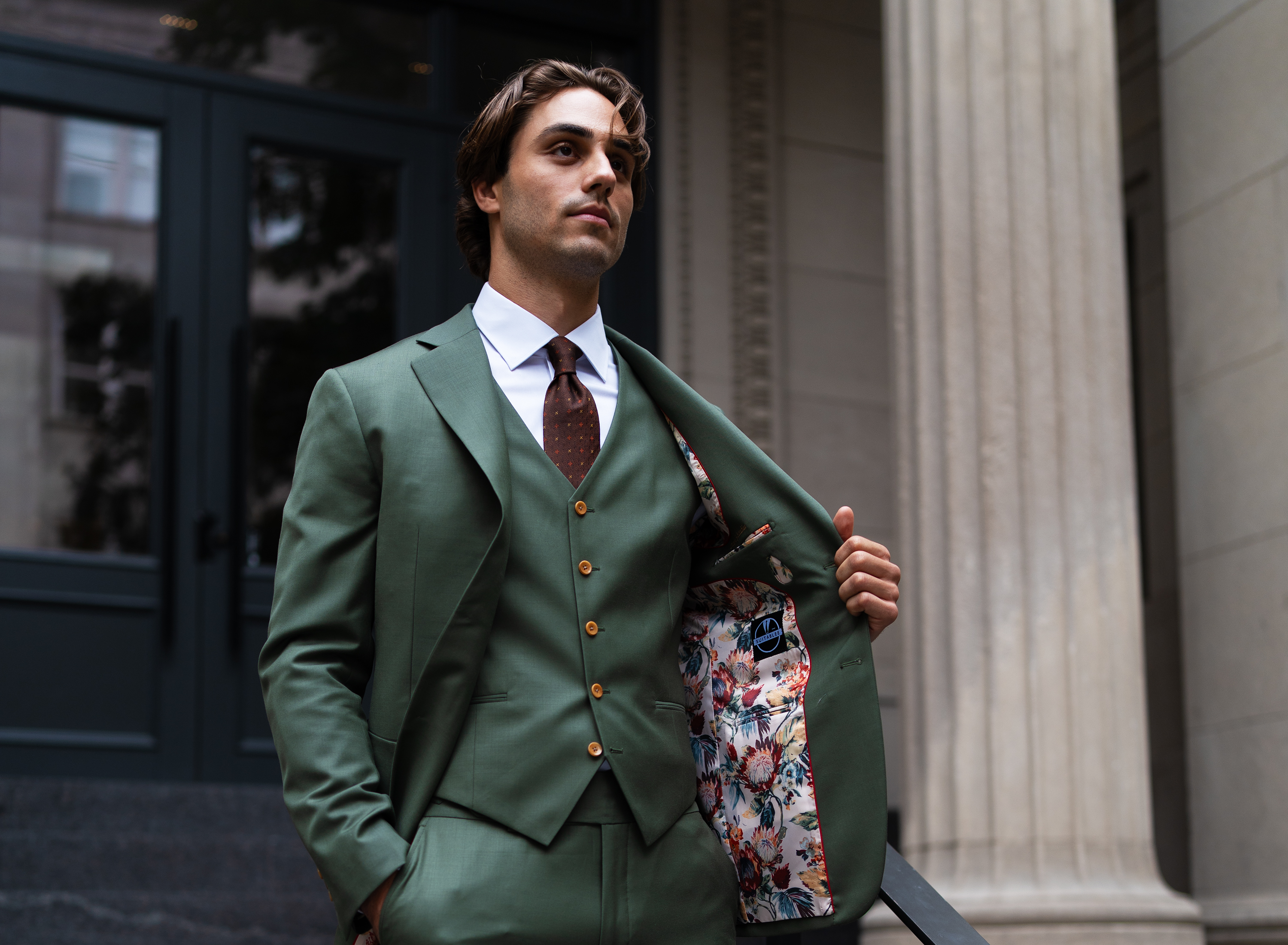
This suit isn’t for blending in. It’s for the man who knows what he’s doing. With the rise of modern, slim tailoring, the double-breasted suit has evolved from traditional formality into a versatile, contemporary style. Today’s versions are lighter, softer in structure, and incredibly wearable in both professional and social settings.


It speaks with style, and it shows you mean business.

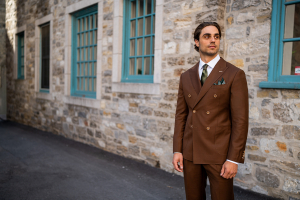
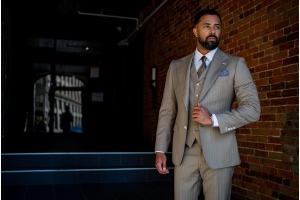
brown-double-breasted-suit-with-green-tie.jpg

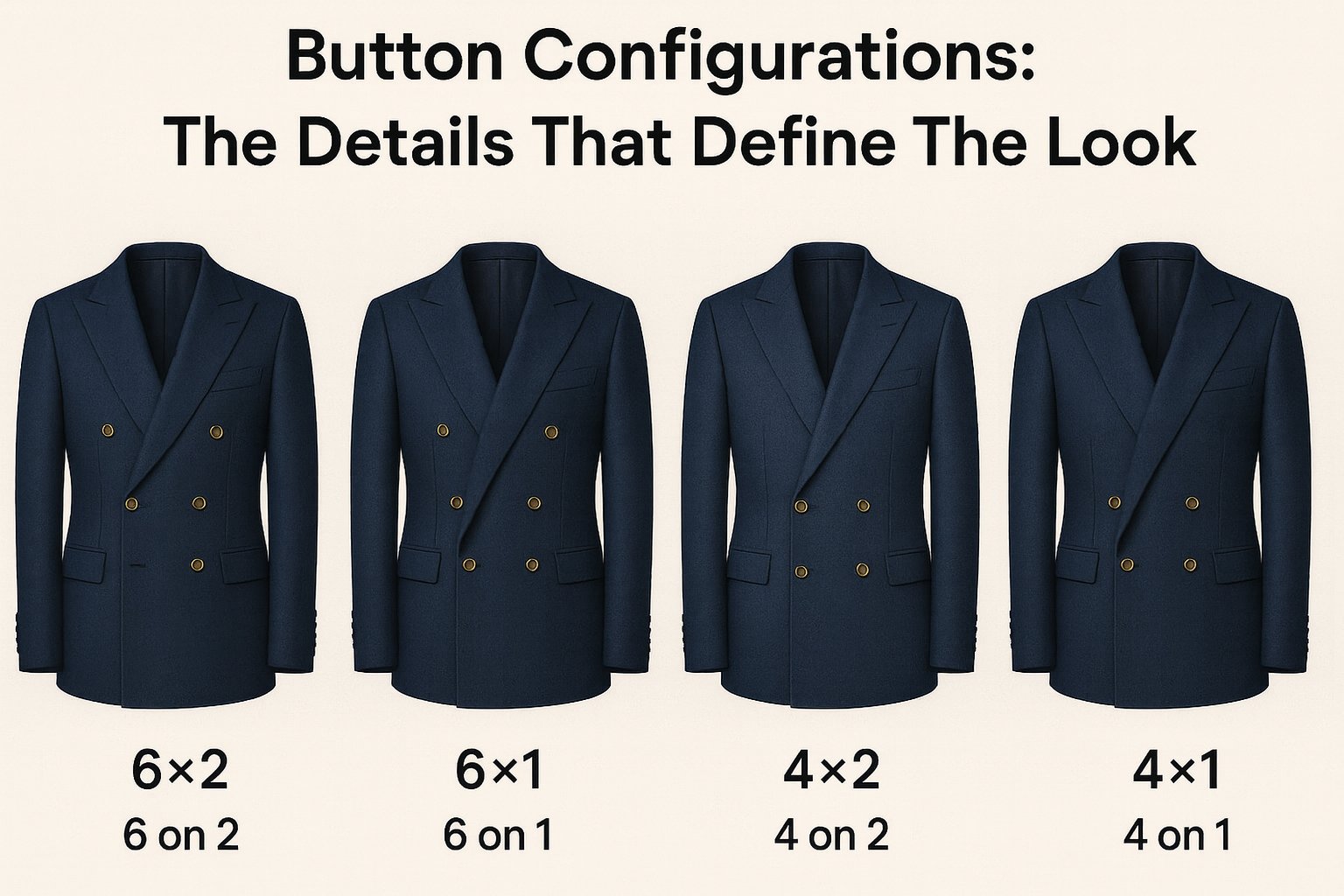
Button Configurations: The Details That Define The Look

suitablee-button-configurations.jpg

When it comes to double-breasted suits, button placement isn’t just a matter of style, it’s a structural decision that reshapes the entire look and feel of your jacket. From the angles of your lapels to the silhouette of your torso, each configuration tells a different story.


Let’s start with the most familiar: the 6×2 layout. This is the gold standard in double-breasted tailoring. With six buttons displayed across the front and two functional ones in the middle, this setup creates a clean, architectural V-shape that flatters nearly every build. It’s balanced, timeless, and consistently sharp. If you’re wearing a double-breasted suit for the first time or investing in a piece meant to last, this is the safest, most versatile choice. Just remember, you only fasten the top working button. Never the bottom.


For those who prefer a little more edge, the 6×1 layout drops the fastening point lower on the torso, opening the lapel line and elongating the frame. The result is more relaxed and fluid, lending itself well to modern and fashion-forward styling. This version favors taller or slimmer builds, offering a softer, elongated silhouette with just the right amount of flair.


Then there’s the 4×2 layout, a more streamlined alternative that uses only four buttons instead of six. With two functioning buttons and a slightly more minimal structure, this setup delivers a clean, modern look. It’s especially effective on smaller frames, where reducing visual bulk allows the jacket to sit closer to the body without overwhelming it.


The 4×1 configuration is rare, bold, and undeniably stylish. With one low button fastening and a sweeping lapel line, it leans heavily into contemporary design. It’s less about tradition and more about aesthetic impact, making it ideal for statement-makers, not necessarily traditional officewear. This cut can feel avant-garde, but when executed with precision tailoring, it becomes an unforgettable look.


Each configuration carries its own visual weight. The more buttons you include, the more structure and traditional formality the jacket communicates. Conversely, fewer buttons create a more minimalist and progressive appearance. Even subtle changes in spacing or stance can influence how broad your chest looks or how tapered your waist appears all without changing your actual size.


At SUITABLEE, we guide our clients based on both body proportions and intent. Our go-to recommendation? The 6×2 layout. It’s universally flattering, adaptable to a wide range of occasions, and visually precise. But for those seeking something with a more elongated, minimalist finish, we’ve reimagined the 4×1 configuration. Built on a 6×1 base but with the upper decorative buttons removed, it achieves a sleeker, cleaner lapel line while preserving the structure of a proper double-breasted jacket.


Ultimately, the button layout you choose should enhance your posture, elevate your presence, and reflect your personal taste. With SUITABLEE’s made-to-measure expertise, every detail, down to the last button, is tailored precisely to you.

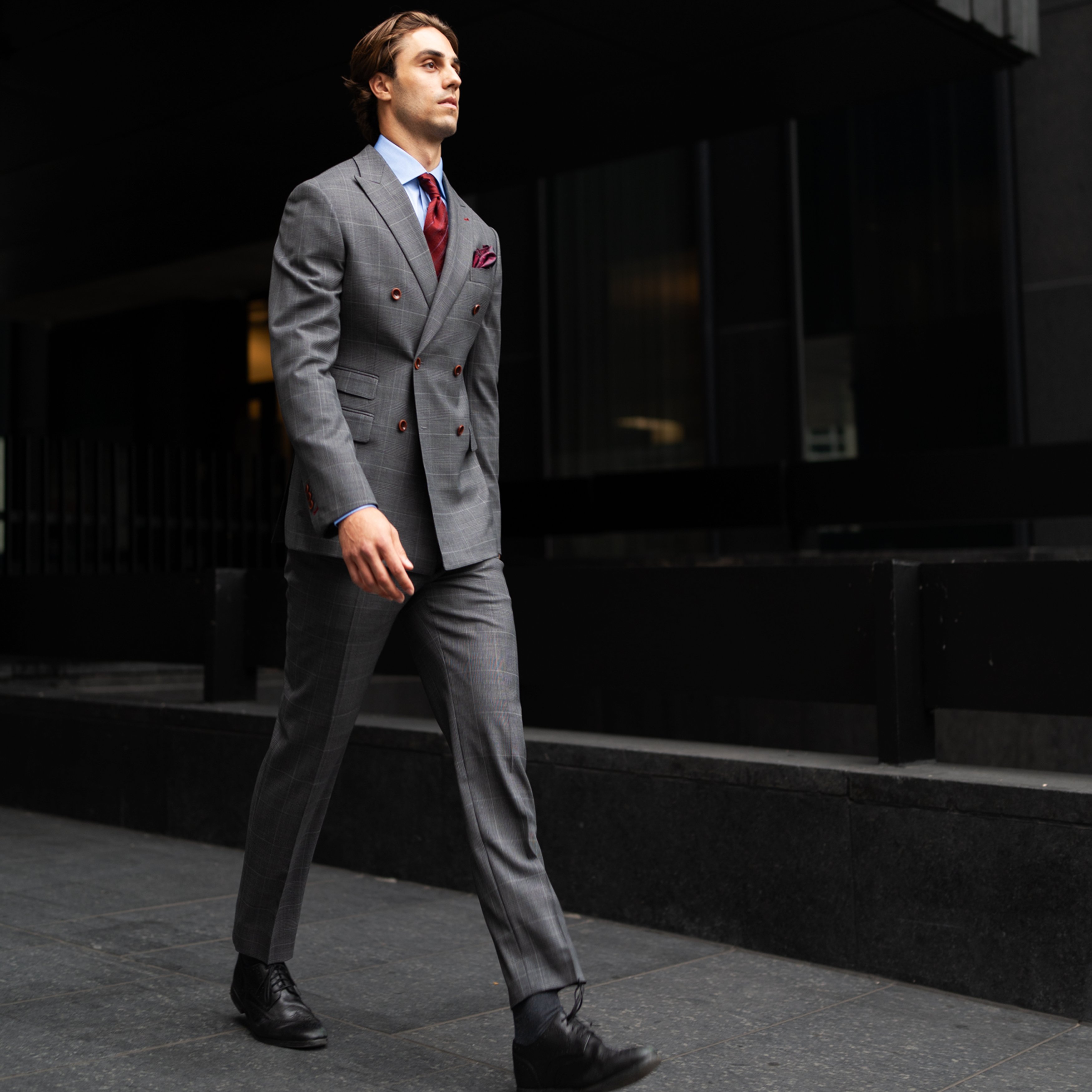
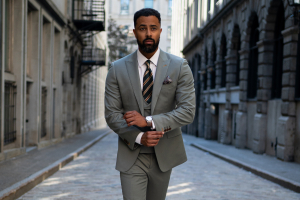
double-breasted-grey-suit-street-style-suitablee.jpg


Fit: The Make-or-Break Factor

Getting the fit right is essential. Unlike single-breasted suits, the double-breasted version stays closed, so there’s little room for error.

  • Shoulders and Chest: Seams must sit right at the edge of your shoulders, with a smooth chest that doesn’t pull or billow.
  • Waist and Length: A slight taper through the waist flatters your frame, while the jacket should end around mid-seat level.
  • Sleeves: Aim for a half-inch of shirt cuff showing, and a slim taper through the arms.
  • Buttons: Stick with the classic 6×2 (six buttons, two functional). And always leave the bottom button unfastened — it preserves the natural drape of the jacket.


How Body Types Can Wear It Best

The double-breasted suit favors strong silhouettes, but with the right tailoring, any body type can wear it well.

  • Shorter Men: Choose a jacket with higher button placement and avoid wide lapels. Slightly shorter lengths help elongate your appearance.
  • Broader Builds: Use soft structure, less padding, and a gentle waist taper. Go for subtle vertical lines or solid colors to streamline the look.
  • Slim Builds: This is the natural audience for double-breasted suits. Add wide lapels and structured shoulders to enhance presence.

A skilled tailor is your best friend here, small adjustments make a huge difference.

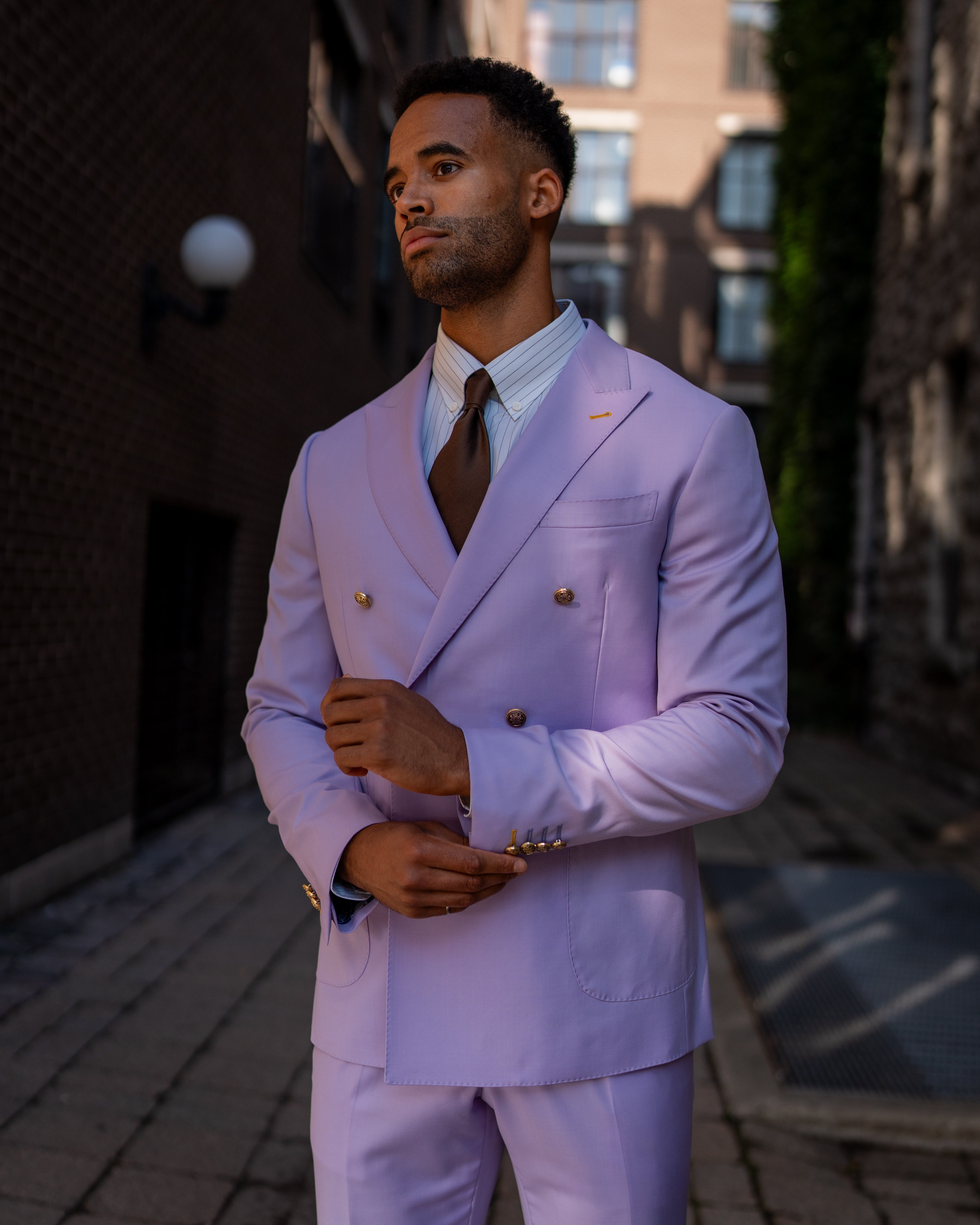
pastel-lavender-double-breasted-suit.jpg.jpg


Style, Fabric, and Color: Making It Yours

When it comes to lapels, go wide and peaked. It’s the signature look for this type of suit and adds visual strength to the upper half of your body. Shawl lapels are reserved for tuxedos, and notch lapels rarely belong on a double-breasted jacket.


Fabric-wise, stick to wool for year-round wear. Flannel works beautifully in cooler months, while linen or cotton blends give the suit a relaxed vibe in summer. Patterns like subtle checks or pinstripes can work, but let the structure of the suit be the standout. You don’t need loud prints to make a statement.


Color is where you get to express your personality. Navy and charcoal are safe, stylish choices for work or formality. For something more daring, try olive, light grey, or even a rich burgundy for social settings.

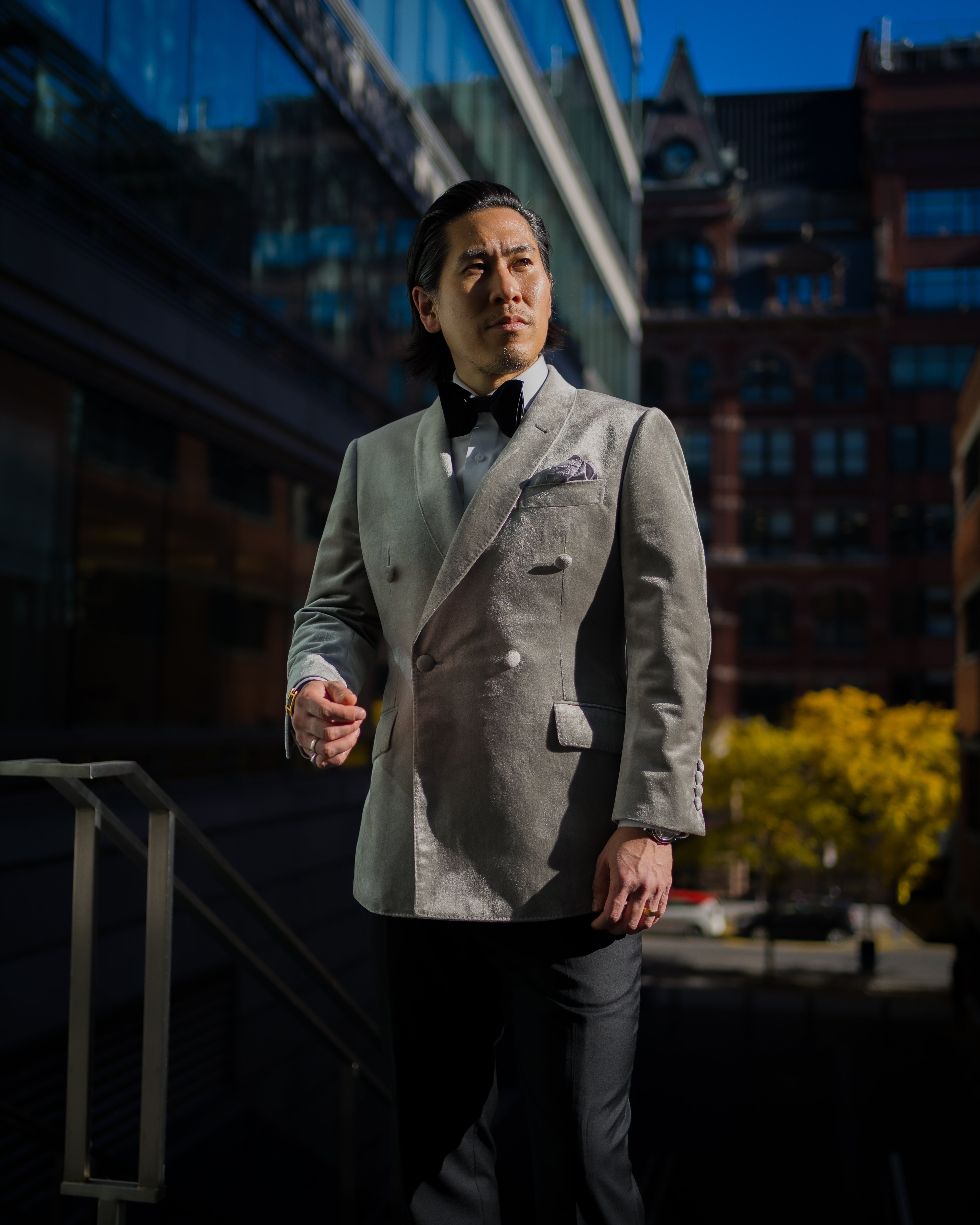
grey-velvet-double-breasted-suit-men-urban-style.jpg

Suiting for Climate: Fabric Tips

Your environment matters more than you might think.

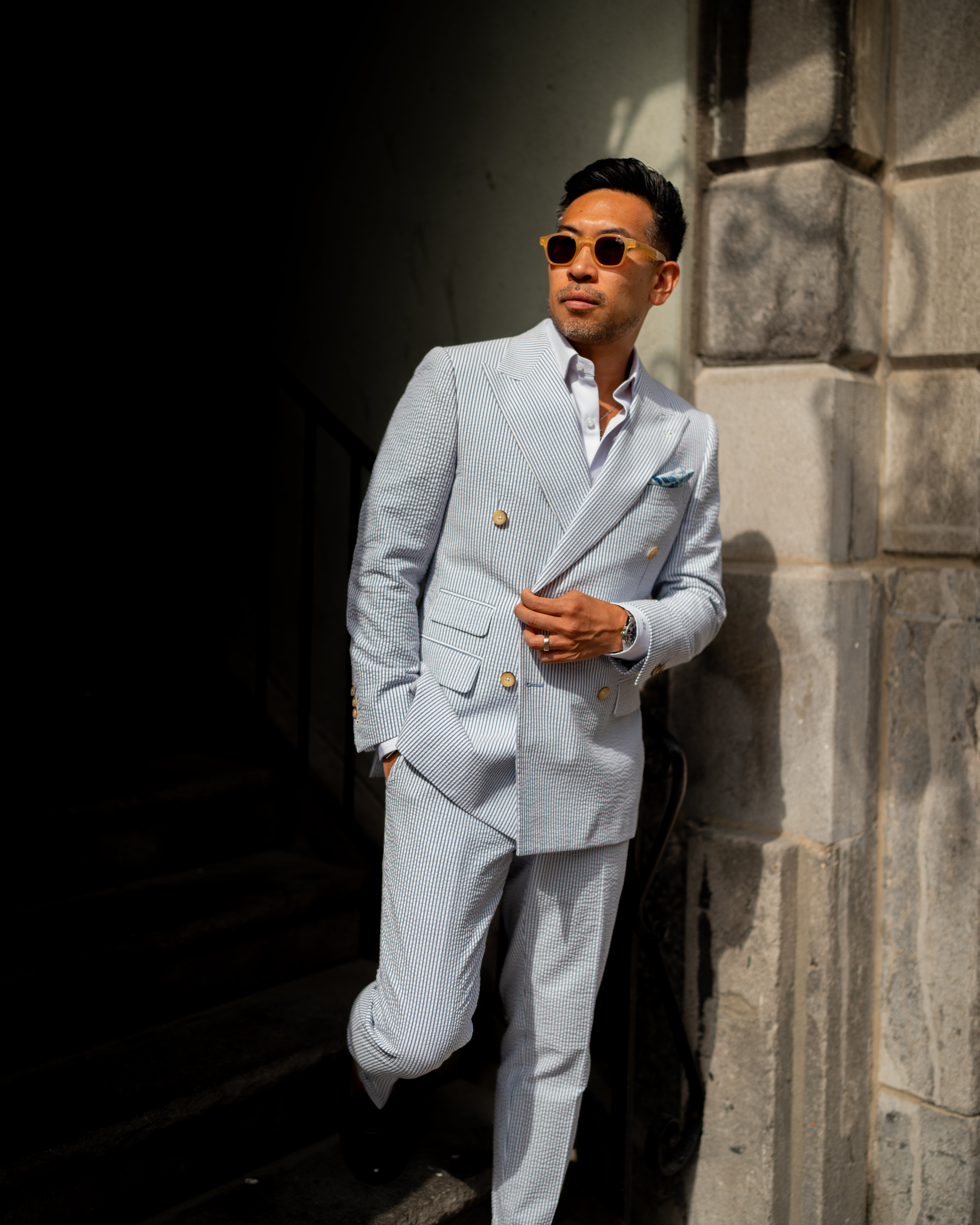
  • Hot weather: Stick with unlined or half-lined jackets in tropical wool, linen blends, or seersucker.
  • Cold weather: Use flannel, heavier wools, or tweed to retain structure and warmth.
  • Humid areas: Choose breathable weaves and avoid thick shoulder padding.


Occasions to Wear a Double-Breasted Suit

Despite its structured appearance, the double-breasted suit can be incredibly versatile. 


For business or formal events, pair it with a crisp white or light blue shirt, a silk tie, and polished dress shoes. Add a pocket square if you're feeling bold, it shows you’ve thought about the details.


At weddings or upscale parties, the double-breasted look shines. Choose a darker tone, opt for sharp accessories, and stand tall, literally and figuratively.


Want to wear it more casually? Lose the tie. Unbutton the shirt. Swap dress shoes for loafers or even clean white sneakers. Pick a jacket in a lighter fabric with softer structure, and suddenly the suit doesn’t feel so formal anymore. It just feels cool.

Caring for Your Double-Breasted Suit

This type of suit holds its shape longer when cared for properly.

  • Use a wooden hanger with wide shoulders to preserve form.
  • Brush gently after wear to remove dust and particles.
  • Steam lightly before wear rather than constant dry cleaning.
  • Store in a breathable garment bag during off-season.

It’s an investment. Treat it like one.

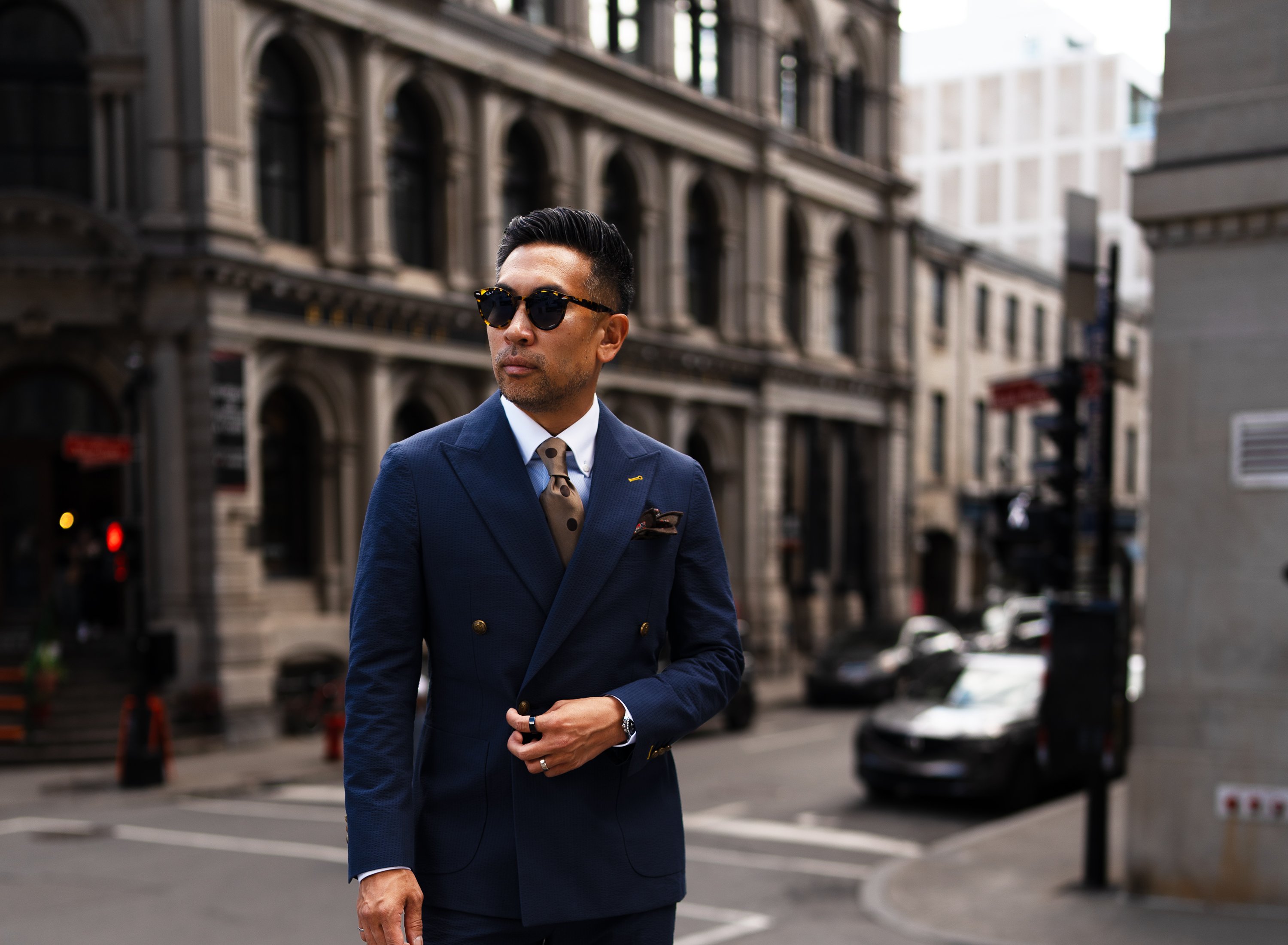
classic-navy-double-breasted-suit-street-style.jpg


The SUITABLEE Perspective

A double-breasted suit isn’t just another option, it’s a statement of purpose. When tailored with precision and styled with intention, it becomes one of the most powerful pieces a man can wear. It shapes perception, posture, and presence.


What makes it truly impactful, however, isn’t just the cut or construction. It’s how the wearer feels in it. Confidence begins when your suit doesn’t just fit your frame, it fits your personality, your ambition, your moment.


That’s where we come in. At SUITABLEE, every garment is crafted to bring out the best in the man who wears it. We design with detail, cut with care, and tailor for how you move through the world. Whether you're stepping into a boardroom or raising a glass at a celebration, your double-breasted suit should feel like it was made for exactly that. Because it is.


Step Into Confidence with SUITABLEE
Discover the craftsmanship behind our custom double-breasted suits. Schedule your Virtual or Showroom Appointment and experience a fit that’s uniquely yours, tailored for presence, precision, and personal style.


Ready to put it into practice? Book a custom suit fitting at SUITABLEE — Montreal, Brossard, Ottawa, Toronto or Laval.

Custom suits starting at $1,000. Three-week delivery. 95% first-fit guarantee.


Frequently Asked Questions


What is the best button configuration for a double-breasted suit?

The 6×2 layout is the most versatile and flattering choice, creating a clean, architectural V-shape that works for nearly any build. Only the top functional button should be fastened, never the bottom one, to preserve the jacket's natural drape.


Should the bottom button be fastened on a double-breasted suit?

No. On the classic 6×2 configuration, only the top functional button is meant to be fastened. Leaving the bottom button open preserves the jacket's structure and drape.


Can a double-breasted suit be worn casually?

Yes. Removing the tie, unbuttoning the shirt, and swapping dress shoes for loafers or clean sneakers immediately relaxes the look. Choosing a jacket in a lighter fabric with softer structure also helps it read as less formal.