Business Suits in Toronto: Why Professionals Choose SUITABLEE

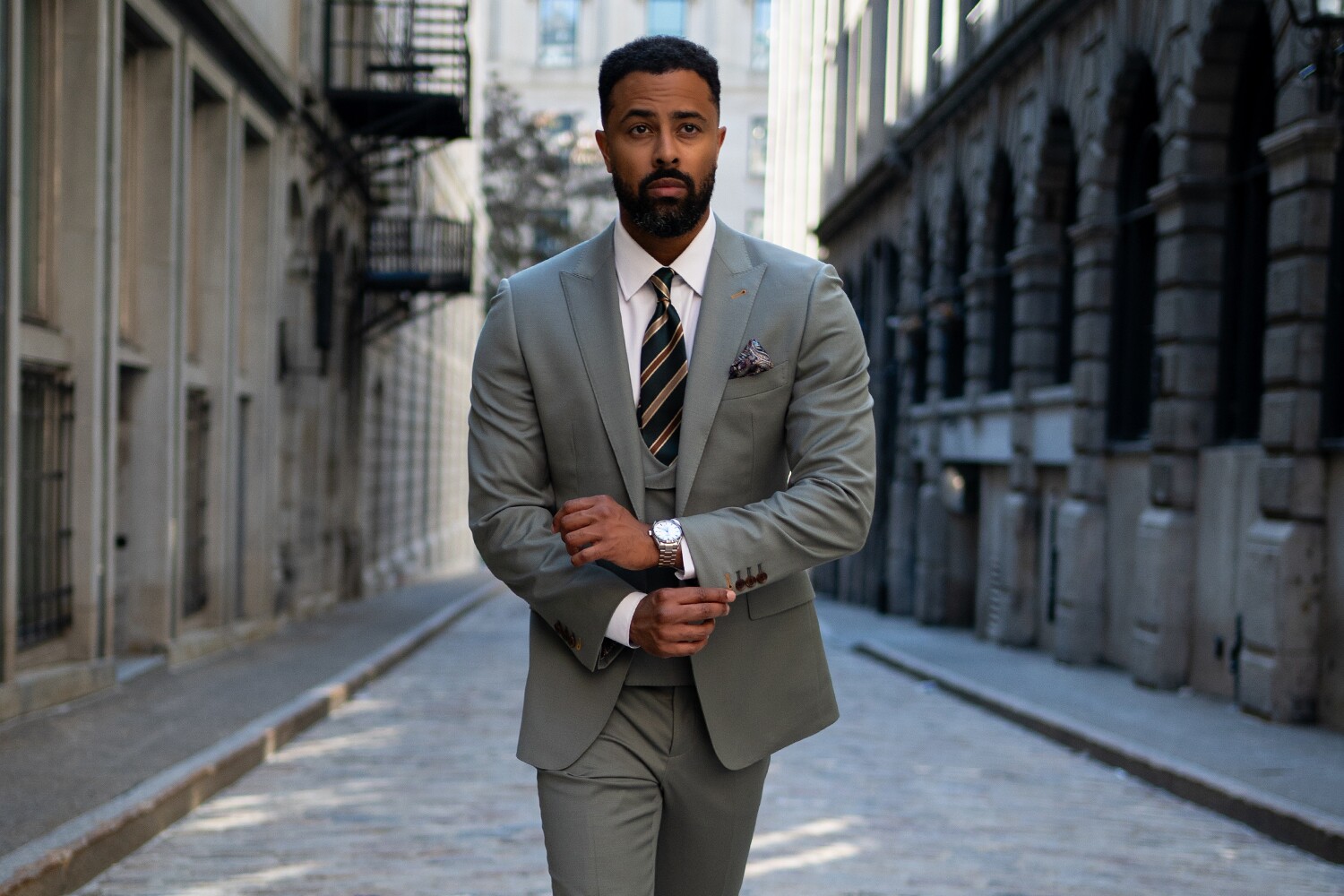
Toronto professionals choose SUITABLEE for three reasons. A pattern built from a 3D scan of their own body rather than pulled off a size run. Full control of the design, from lapel and lining to construction and vest. And that pattern kept on file, so every suit after the first is a fabric decision instead of a fitting. Business suits start at $1,000, arrive in three weeks with a 95% first-fit guarantee, from the showroom at 20 Richmond St E in Old Town, a ten-minute walk from the Financial District.


Bay Street Rewards Fit, Not Flash


Toronto's business dress culture is more conservative than Montreal's. Style writers covering both cities have noted it for years: Montreal carries a bolder professional palette, while Bay Street holds to a narrower range and treats deviation as a risk. Traditional banks and law firms still expect business formal, and the range that reads as correct is genuinely narrow.

That constraint changes what a custom suit is for. When the colour is navy or charcoal and the pattern is a fine stripe at most, there is very little left to distinguish one suit from another except how it fits. The eye reads fit before it reads a label, which is why a well-cut mid-priced suit outperforms a designer one bought off the rack.


There is a seniority signal in it too. Junior professionals are safest in solids. Room for a point of view, a considered pattern or a better cloth or a personal detail, is earned rather than assumed. A custom process lets that evolve over years rather than requiring a new wardrobe when it does.


A Business Suit That Fits From Day One, Built From Your 3D Scan


The appointment takes 45 minutes, and for most clients it is the only fitting needed. Traditional bespoke typically works through two or three, refining the pattern between each.


An infrared scan captures hundreds of structural points: shoulder slope, posture, the drop from chest to waist, the asymmetries a tape measure misses. That scan generates your individual pattern directly, rather than starting from a standard size that has to work across many different body shapes.


The difference shows up after eight hours, not in the fitting room. A jacket cut from a standard block can pull at the shoulder or gap at the collar, and there are limits to how far alterations can reshape a garment without affecting its original balance.


Design Control Is What Sets Your Business Suit Apart 


Fit is what a business suit gets right. Design is what makes it yours, and in a room where everyone is in navy, design is where individuality survives.


Lapel. Notch is the default and the safe choice for a first suit. Peak reads more assertive and tends to appear on the third or fourth suit in a rotation. Width matters as much as shape, because a lapel proportioned to your own chest looks considered where a stock width looks borrowed.


Construction. This is the choice that outlasts every other one. A fused jacket has its front glued to the shell and eventually bubbles. Half-canvas and full-canvas jackets use a floating layer that moves with the body and holds its shape for years, which is what a suit in weekly rotation needs.


The details nobody else sees. Lining, working cuff buttons, horn buttons instead of plastic, a monogram inside the jacket. None of it registers from across a boardroom, and in a conservative office that is exactly the point: personality that does not announce itself.


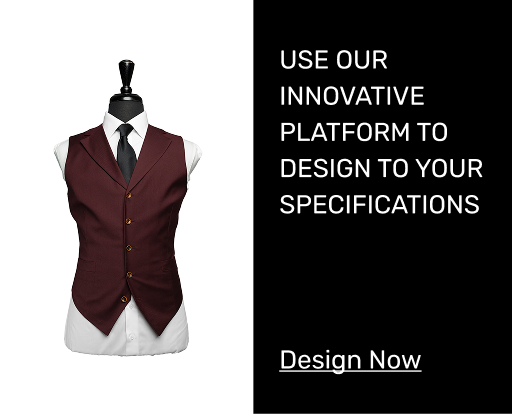
Vest. A waistcoat takes a two-piece business suit from an ordinary Tuesday to a client dinner without a second garment.


Start with the custom design tool to see how the choices come together, or work through them in person at the Toronto showroom.


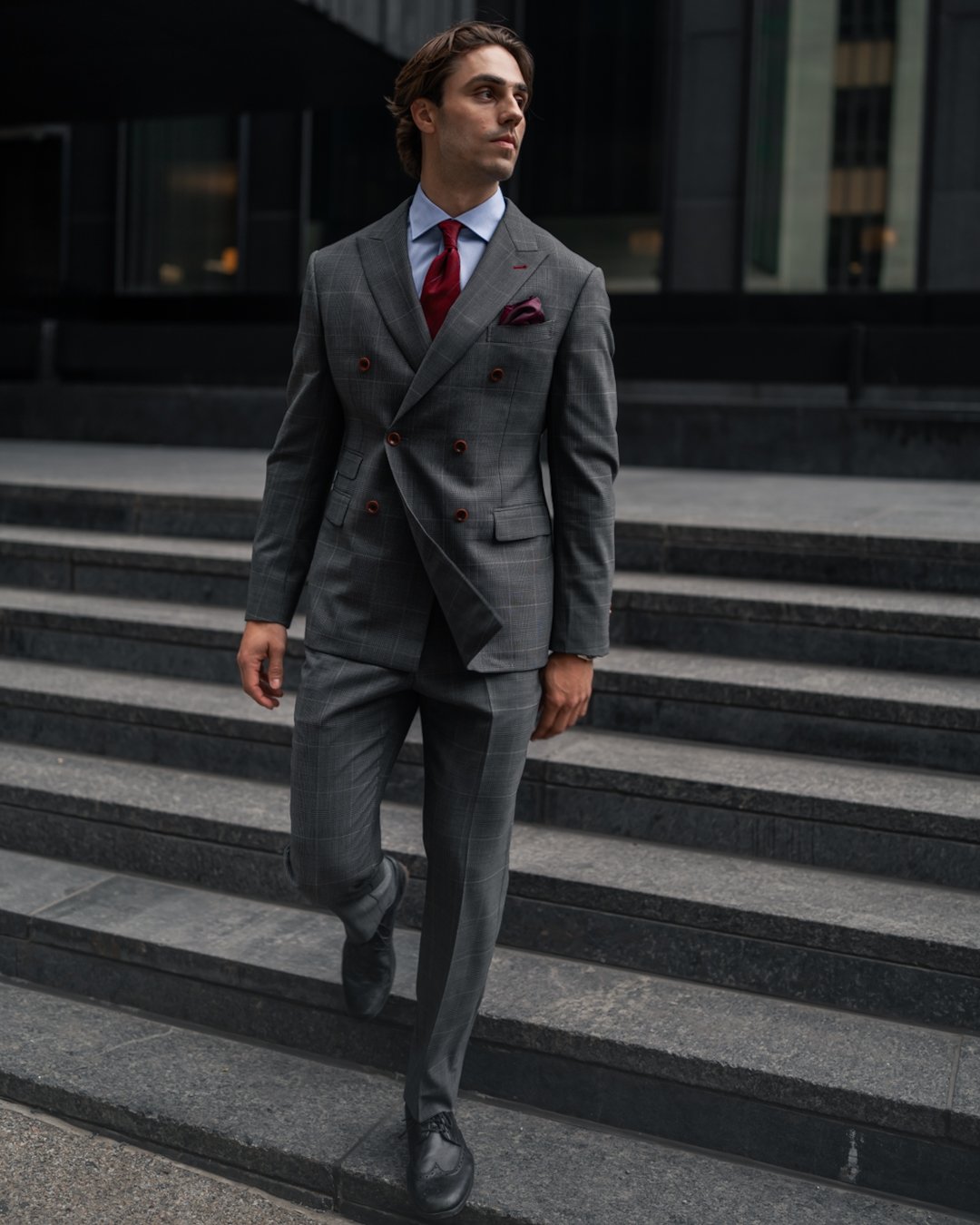
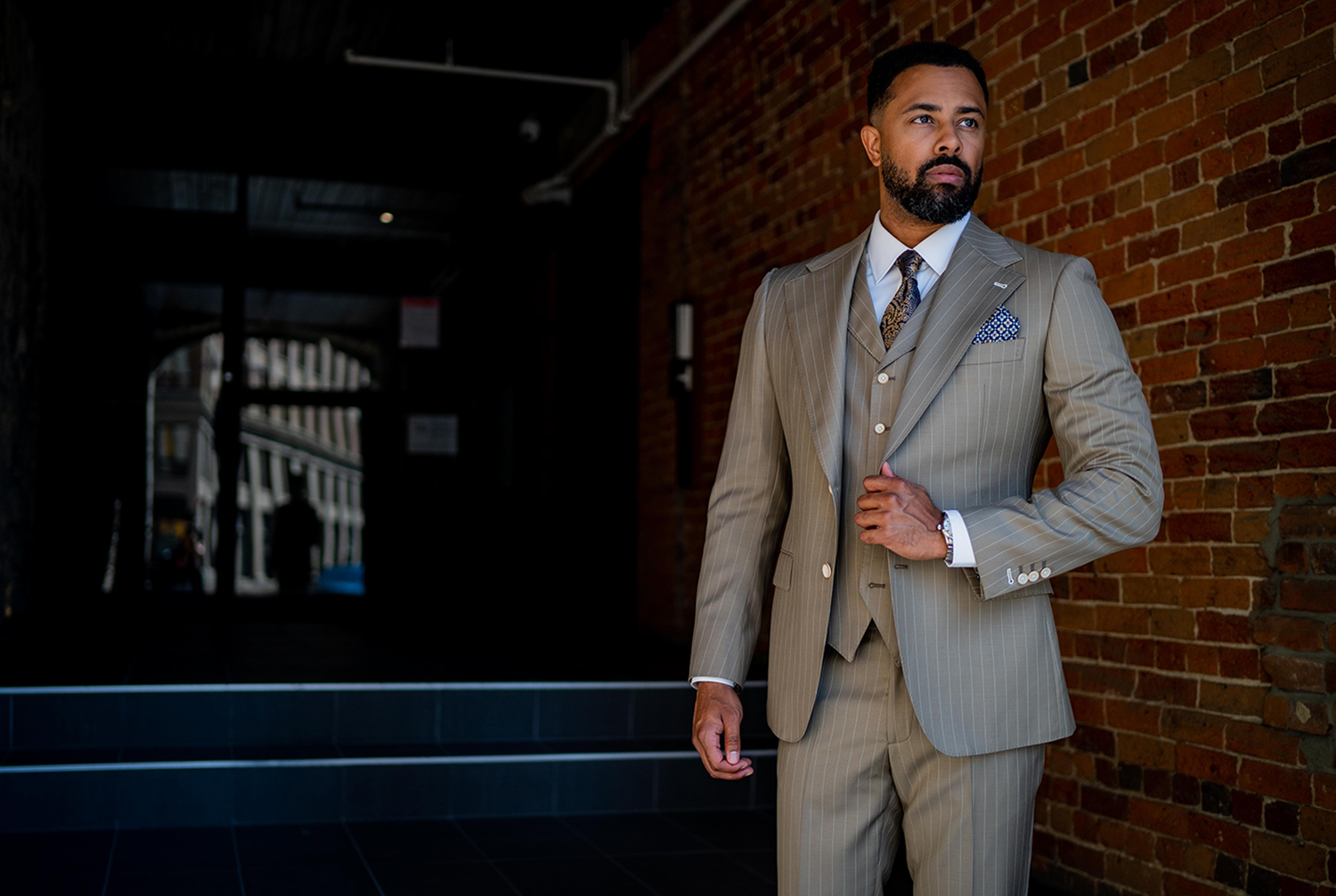
costume-affaires-homme-gris-carreaux-croise-toronto.jpg


A Business Suit That Holds Its Line Through a Full Workday


A business suit is asked to survive a commute, four hours of sitting, a presentation, and an evening that runs longer than planned. That is a different structural demand than a garment worn for one evening.


Drape is where it shows. A jacket that hangs cleanly from the shoulder holds its line through all of that, while one fighting the body creases, twists, and telegraphs every hour it has been worn. Faults that are barely visible in a fitting room become the thing people notice by late afternoon.


That is what a pattern built from your own proportions is protecting: not how the suit looks for the five minutes you try it on, but how it looks at four o'clock.


A Business Suit Cut to Layer Under a Toronto Winter Coat


A Toronto business suit spends five months a year under a topcoat and above a pair of winter boots. Both are where a good line goes wrong.


A jacket cut close enough to look sharp in an office often will not sit properly under an overcoat, and one cut loose enough to layer looks slack without it. A pattern built from your own measurements accounts for the shoulder and chest room that layering actually requires, instead of splitting the difference the way a stock size must.


Then the boots. A well-cut suit over salt-stained winter footwear is a common February sight downtown and undoes everything above it. Keep proper shoes at the desk.


The PATH creates its own version. Much of the Financial District moves between towers underground without a coat, which means the jacket alone is doing all the work in a lot of the day's incidental encounters. It gets seen more here than a jacket does in most cities.


That is why the cut has to work both ways. A pattern generated from your own scan holds its line with the coat on and without it, because the room it allows for layering was measured rather than guessed.


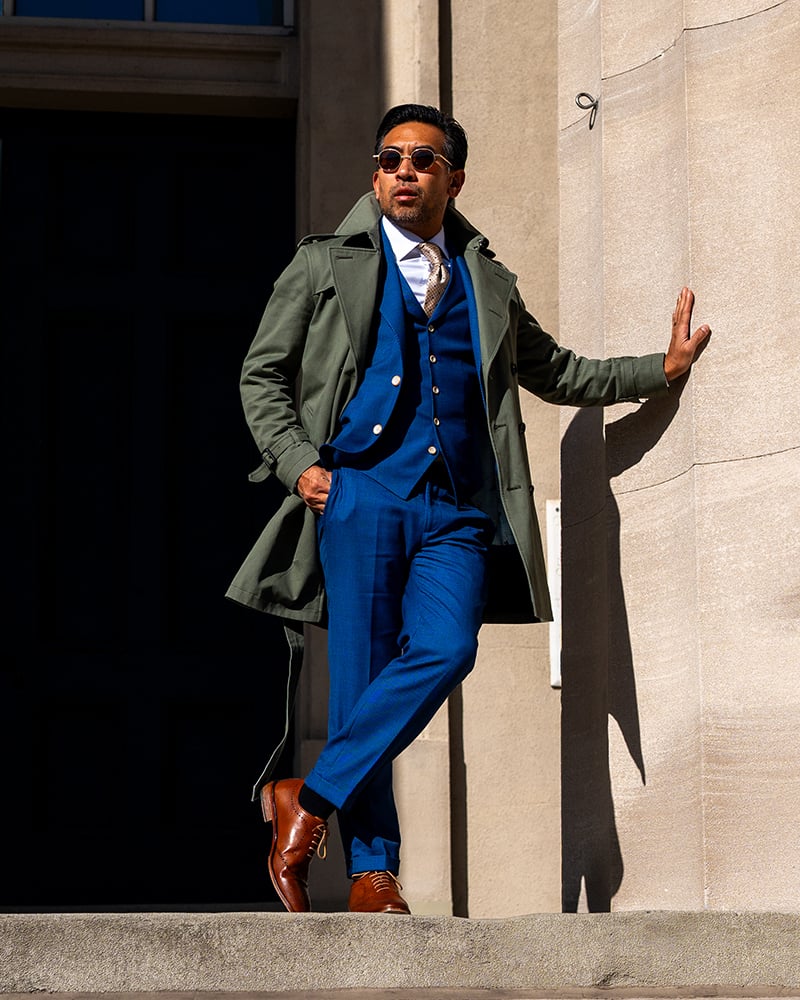
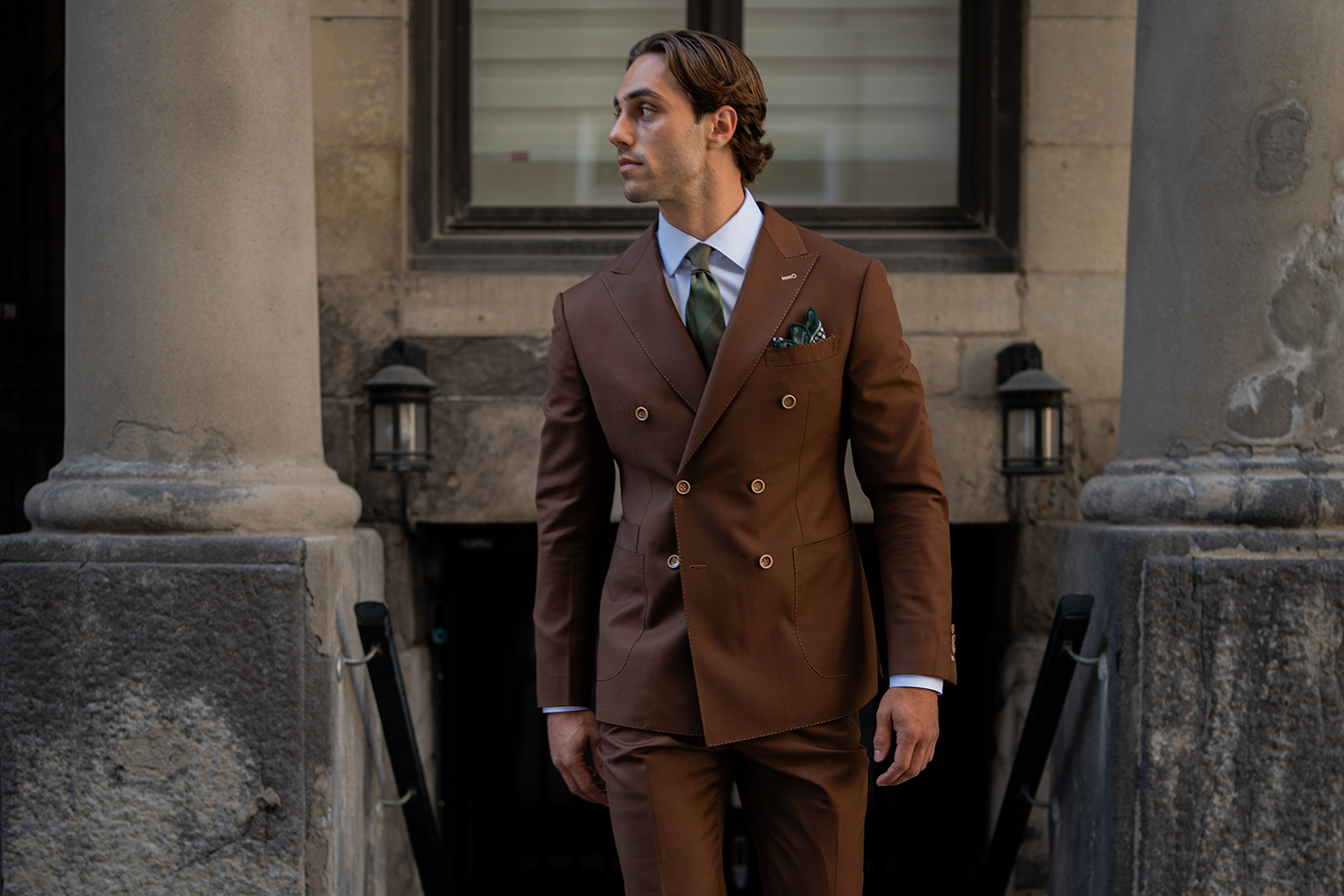
costume-affaires-homme-bleu-trois-pieces-manteau-toronto.jpg


A Bay Street Rotation Built One Suit at a Time


Nobody on Bay Street buys a professional wardrobe in an afternoon. It accumulates over a career, usually one suit per promotion or per worn-out jacket, which is exactly the pattern that punishes anyone starting from scratch each time.


Your scan is kept on file. The second suit is a fabric decision, not another appointment, and the pattern sharpens with each adjustment, so the fourth fits better than the first. Charcoal first, navy second, a fine stripe or a nailhead third once the basics are covered. That order matters more in Toronto than in most cities, because the room for pattern is narrow enough that the first two suits carry most of the working week.


How Toronto Business Suit Providers Compare


Toronto professionals can choose between off-the-rack, made-to-measure, and bespoke tailoring, and each approach solves the fit problem differently.


Indochino describes its process as made-to-measure, adjusting a base pattern using a client's measurements and preferences. Garrison Bespoke offers both bespoke and made-to-measure tailoring, including a traditional bespoke process for clients who want a hand-drafted pattern and multiple fittings. Suitsupply works primarily in ready-to-wear from standard size blocks, with made-to-measure available and alterations handled after purchase.


SUITABLEE incorporates infrared body scanning and digital pattern development into its fitting process. Your measurements and pattern are kept on file, so the first appointment establishes a fit profile that later orders build on rather than starting over.


Which approach fits you depends on what you weigh most heavily: price, number of appointments, delivery time, design control, and how individual you want the pattern itself to be. Traditional bespoke reaches an excellent result through several fittings over a longer timeline. SUITABLEE aims at a highly individualized pattern with a shorter, more repeatable process, starting at $1,000 and typically ready in about three weeks.


For a broader explanation of the categories, read made-to-measure vs off-the-rack. For how the digital approach compares to traditional bespoke, read why SUITABLEE's digital patterning beats bespoke.


Women's Business Suits Fit Where Standard Sizing Fails


Off-the-rack womenswear is usually created around standardized proportions. When an individual's shoulder, bust, waist, hip, rise, or trouser proportions differ from those assumptions, getting every part of a suit to fit at once can be difficult.


A jacket sized correctly through the shoulders may require work through the waist. Trousers that fit through the hip may be loose elsewhere. Traditional alterations can solve many problems, but there are limits to how much an existing garment can be reshaped without affecting its original balance and construction.


A scan-generated pattern begins with measurements taken from one individual body rather than relying only on the proportions of a standard retail size, which is particularly useful for anyone who regularly finds that jackets and trousers fit well in one area but poorly in another.


In a market as restrained as Bay Street, that matters more than it might elsewhere. When the colour is navy and the pattern is minimal, fit is carrying the entire impression.


See the women's business suit collection or the corporate women's style guide.


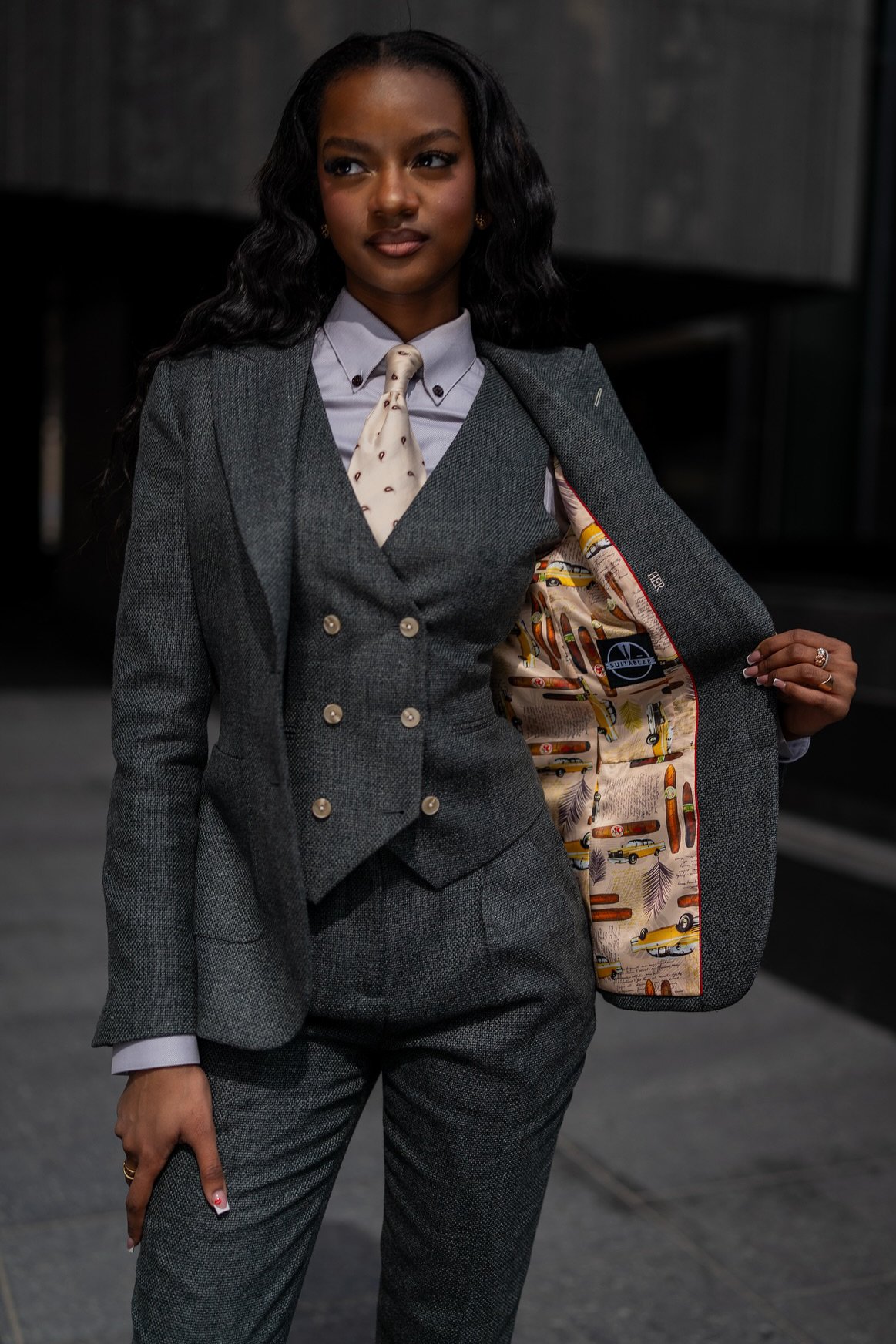
womens-business-suit-grey-three-piece-custom-lining-toronto.jpg


The SUITABLEE Perspective


Bay Street is an honest place to dress. The colours are narrow, the labels are invisible, and what actually separates one suit from another is whether it fits the person wearing it.


That is a good argument for buying the way SUITABLEE works. The first appointment is an investment in a pattern rather than the purchase of a garment, and every suit after it is easier because that work is already behind you.


Ready to put it into practice? Book a fitting at the Toronto showroom, or at Montreal, Brossard, Ottawa and Laval. Custom suits from $1,000. Three-week delivery. 95% first-fit guarantee.


Frequently Asked Questions


How much does a custom business suit cost in Toronto?
SUITABLEE business suits start at $1,000, covering a suit built from your own infrared scan, with no alteration budget assumed and a stored pattern that makes future orders faster.


What is the dress code in Toronto's Financial District?
Business formal remains standard at traditional banks and law firms, with navy and charcoal doing most of the work. Some firms have moved to business casual, so it is worth checking before your first day.


What colour should my first business suit be in Toronto?
Charcoal or navy, in a solid. Bay Street rewards restraint, and pattern is generally something you earn room for as you become more senior.


How do I keep a suit looking sharp through a Toronto winter?
Choose a cut that accounts for layering under a topcoat rather than one that only works without it, and keep proper shoes at the desk instead of wearing winter boots with the suit.


How is SUITABLEE different from Indochino or Garrison Bespoke?
Indochino reshapes an existing pattern toward your measurements. Garrison Bespoke hand-drafts and refines across multiple fittings. SUITABLEE generates the pattern from a 3D scan, reaching bespoke precision without the multi-fitting timeline.


Where is SUITABLEE's Toronto showroom?
At 20 Richmond St E in Old Town Toronto, about a ten-minute walk from the Financial District and close to St. Lawrence Market.