The Different Types of Ties

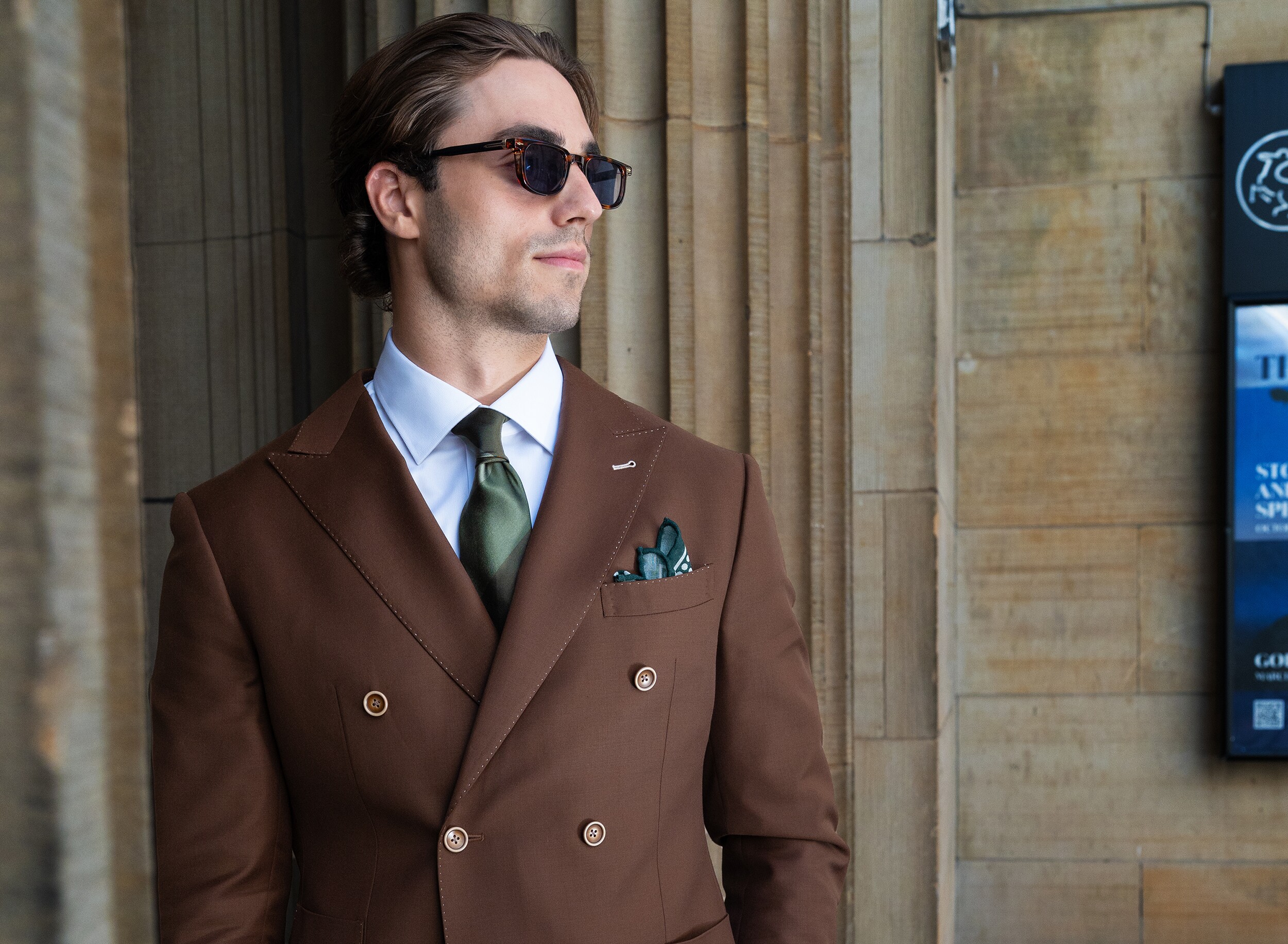
Neckties have long been a symbol of refinement, intention, and personal style. More than a functional accessory, a tie has the ability to define an outfit, signal occasion, and reflect individuality. From historic neckcloths to today’s diverse range of materials, constructions, and styles, ties have continually evolved while maintaining their timeless relevance. 


This guide explores where ties come from, how they are made, and the different forms they take today.

The History of Ties

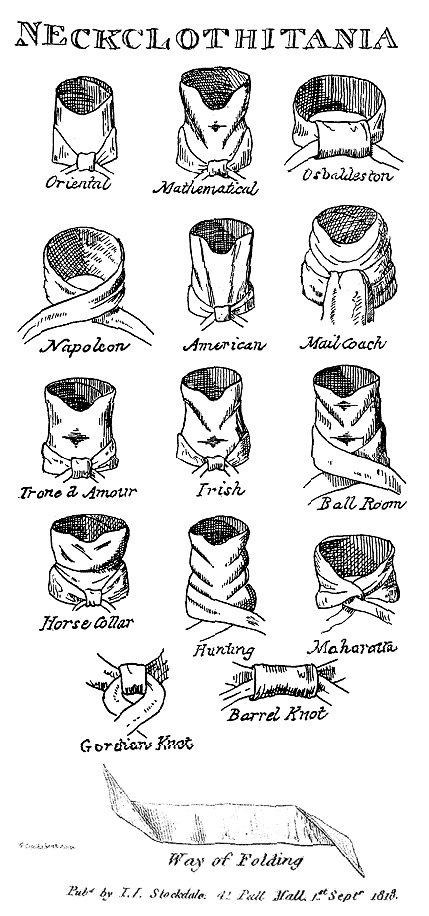
Neckclothitania.jpg

The story of the necktie begins in the 17th century during the Thirty Years’ War when Croatian mercenaries inspired French fashion with cloth tied around the neck. King Louis XIII loved the style so much he named it the cravate, derived from Croat, and it became a fashion staple in Europe.


By the early 20th century, the modern tie took shape when New York tie maker Jesse Langsdorf introduced a method of cutting and sewing fabric on the bias. This allowed ties to lie flat and retain structure. It became the basis of today’s necktie construction.


Throughout the decades, tie widths and styles have changed with fashion trends. Wide ties were popular in mid‑20th century America, while skinny ties made a statement in the 1960s and beyond.

Tie Materials: What They’re Made Of

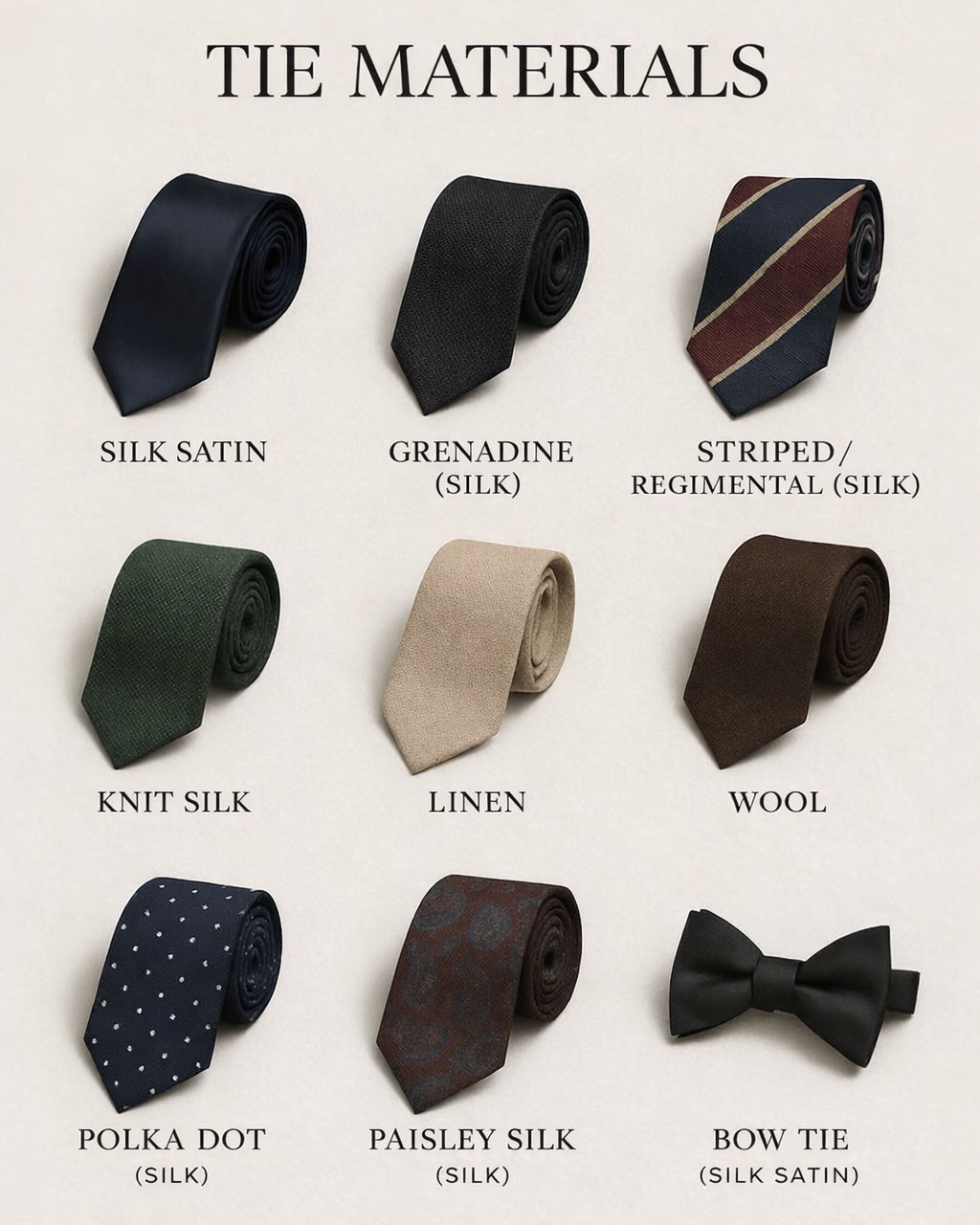
The fabric of a tie plays a major role in how it looks, feels, and wears. Different materials offer varying levels of structure, texture, and formality.

  • Silk remains the most classic and refined option. It is known for its smooth finish and versatility.
  • Wool offers warmth and texture, making it ideal for cooler seasons.
  • Cotton and linen provide a lighter, more casual appearance suited to warmer climates.
  • Polyester is durable and accessible. Many modern versions closely resemble natural fibers.
  • Knit fabrics, typically cotton or wool, introduce texture and a relaxed elegance.

Higher-quality ties often use premium fabrics and feature refined finishing details that contribute to both longevity and appearance.

tie-material-suit-tuxedo_1.png

Main Types of Ties

Neckwear today comes in many forms. Each is suited to different occasions and personal styles.

  • Standard Necktie: The most versatile option. It is appropriate for business and formal wear.
  • Skinny Tie: A slimmer silhouette that offers a modern, fashion-forward look.
  • Bow Tie: Traditionally worn for formal events and black-tie occasions.
  • Cravat & Ascot: Wider neckwear styles often worn inside an open collar for a refined statement.
  • Bolo Tie: A Western-inspired style featuring a decorative clasp and cord.
  • Knit Tie: Textured and relaxed. It bridges casual and smart dressing.
  • Clip-On Tie: A practical alternative designed for ease and uniform wear.
men-in-yellow-tie.jpg

Tie Construction: Folded vs. Sewn

How a tie is constructed affects quality:


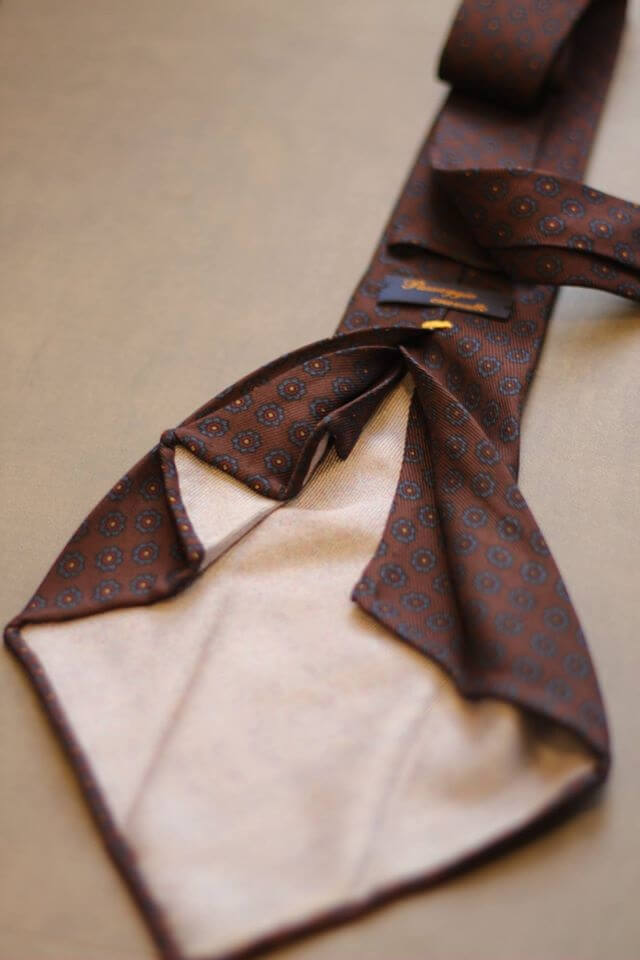
Sewn‑through ties have fabric cut on the bias and sewn with an interlining for structure. This results in higher quality and better knots.


Folded ties come in three‑fold, five‑fold, seven‑fold, etc., which refers to how many times the fabric is folded to build shape. More folds often mean a richer feel and no need for extra canvas.

20170305-02.jpg

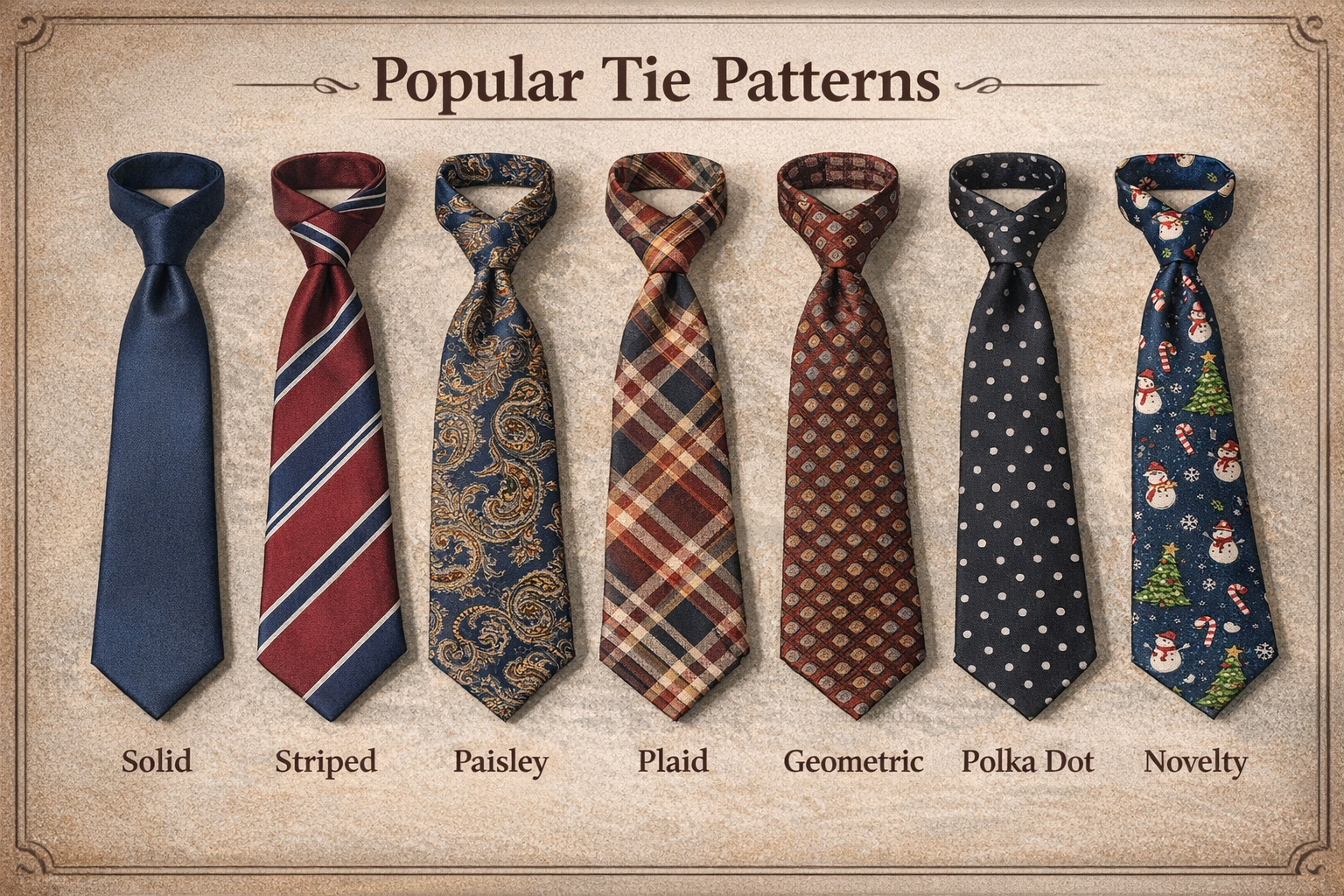
Popular Tie Patterns

Patterns help ties express personality and style:

  • Solid: Clean and professional
  • Striped: Classic business style
  • Paisley: Elegant and bold
  • Plaid/Checkered: Adds texture and visual interest
  • Polka Dot & Geometric: Trend-savvy and playful
  • Novelty: Fun and themed for casual wear
popular-tie-pattern.png


Modern Styling Tips

To choose the right tie:

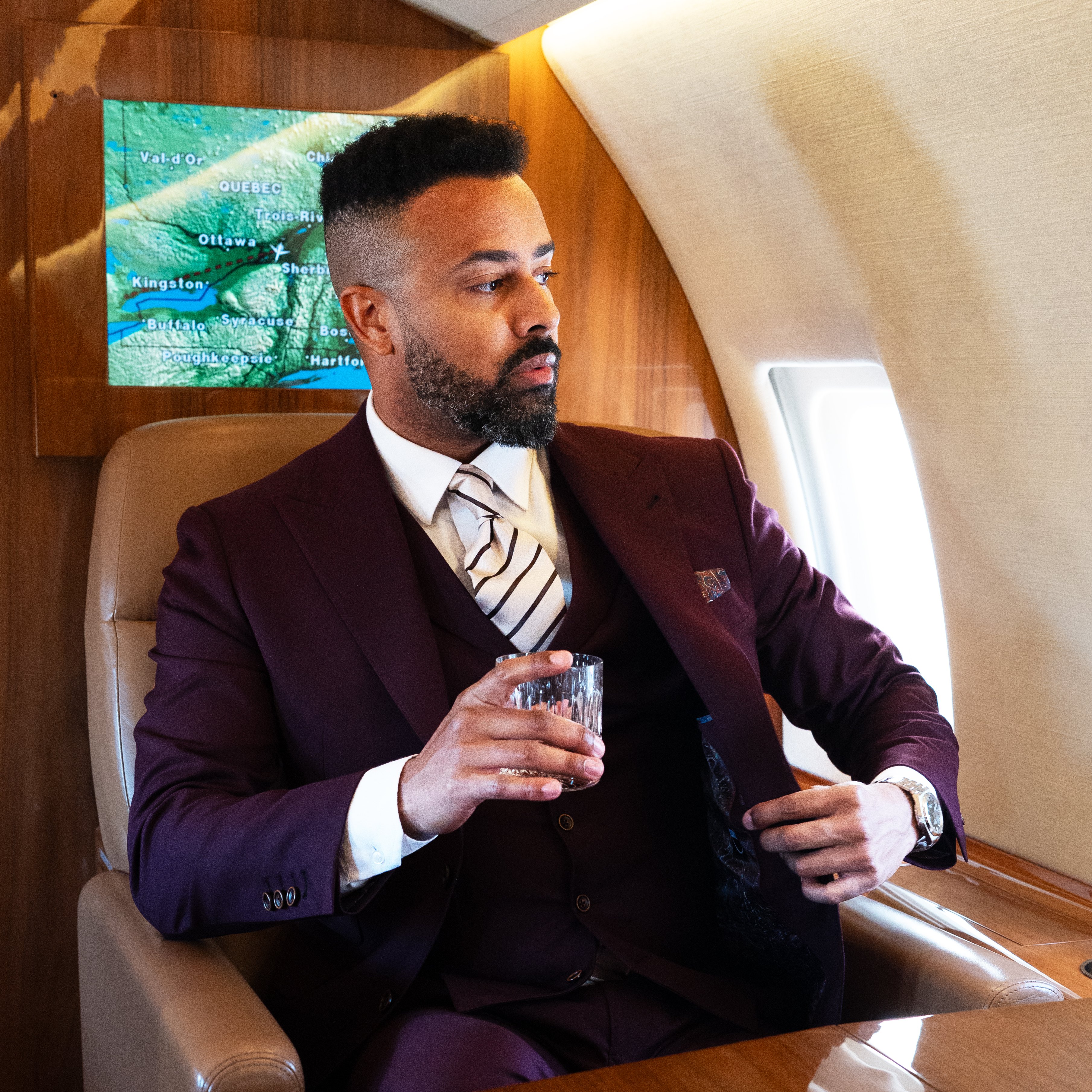
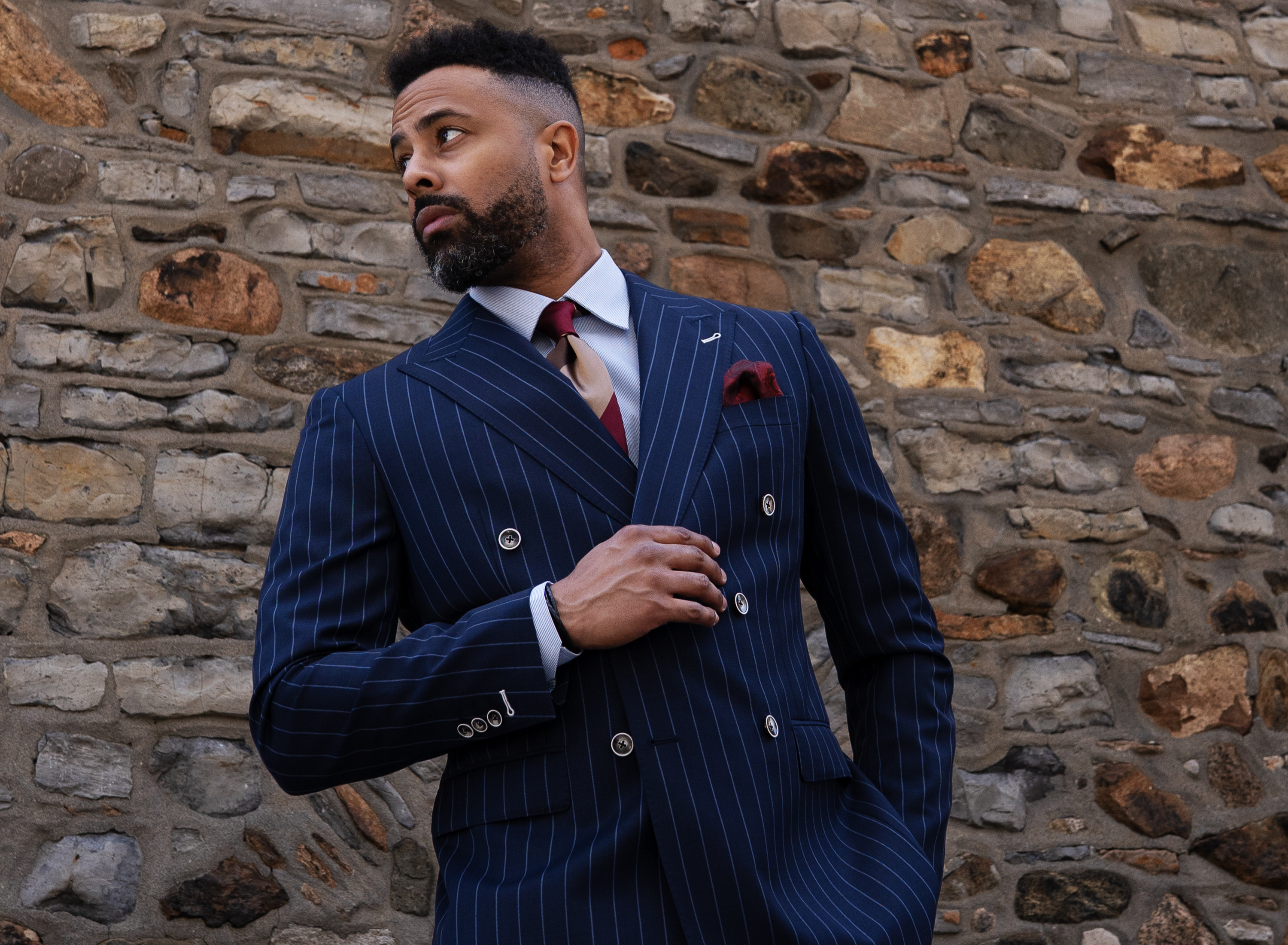
  • Match tie width to lapel width for balanced proportions
  • Silk suits most formal occasions. Wool and knit work well for seasonal or casual looks
  • Pair solid or subtle patterned ties for business. Bolder patterns can shine in less formal settings
men-in-burgundy-suit-with-stripe-white-tie-sit-in-plane.jpg

How to Tie a Tie: 3 Most Common Knots

1. The Four-in-Hand Knot (Easiest)

This is the most common knot. It's simple, quick to learn, and works with most collar types.

Steps:

  • Position: Drape the tie around your neck. The wide end should be on your right and hang about 12 inches lower than the narrow end.
  • Cross Over: Cross the wide end over the narrow end.
  • Loop Under: Bring the wide end behind the narrow end to the right.
  • Loop Over: Bring it back across the front to the left.
  • Pull Up: Pull the wide end up through the neck loop from underneath.
  • Tuck and Tighten: Feed the wide end down through the front loop. Hold the narrow end and slide the knot up to your collar to tighten.

Simple, slightly asymmetrical, and perfect for daily wear.

2. The Half Windsor Knot (Medium)

This knot is medium-sized, balanced, and ideal for professional or semi-formal outfits.

Steps:

  • Position: Start with the wide end on your right, about 12 inches lower than the narrow end.
  • Cross and Wrap: Cross the wide end over the narrow, then wrap it behind.
  • Through the Loop: Bring the wide end up and pass it down through the neck loop.
  • Wrap Across: Pass it across the front from right to left.
  • Finish: Pull the wide end up through the neck loop again, then down through the front knot. Tighten and center.

More formal than Four-in-Hand but less bulky than a Windsor.

3. The Full Windsor Knot (Formal)

The Full Windsor creates a wide, symmetrical triangular knot, perfect for spread collars and formal occasions.

Steps:

  • Initial Cross: With the wide end on the right, cross it over the narrow end to the left.
  • Double Loop: Bring it up through the neck loop and down. Then bring it behind the narrow end and back up through the neck loop from the other side.
  • Bridge: Wrap the wide end across the front of the knot.
  • Tuck: Pull it up through the neck loop and down through the front loop.
  • Adjust: Tighten by gently pulling the wide end and sliding the knot up to your collar.

Best for interviews, formal events, and wide collar shirts.

businessman-shirt-his-tie-fluttering-wind-near-the-building-concept.jpg


The SUITABLEE Perspective


Every tie has its own rhythm. A silk whisper in the boardroom. A bold pattern that opens conversation. A textured knot that quietly commands attention. 


At SUITABLEE, ties are crafted not to complete your outfit but to lead it. The right tie doesn't follow trends. It sets intention. It sharpens your silhouette, anchors your look, and reveals the kind of detail you don't need to explain.


So choose with care, wear with confidence, and let your presence do the talking.


Ready to find your perfect tie?

Explore SUITABLEE’s Tie Collection of handcrafted neckwear made to match your style, purpose, and presence.